TV Studio Lighting Ideas with SUPER SCOPE AQUA: Start with Smooth Dimming and Control
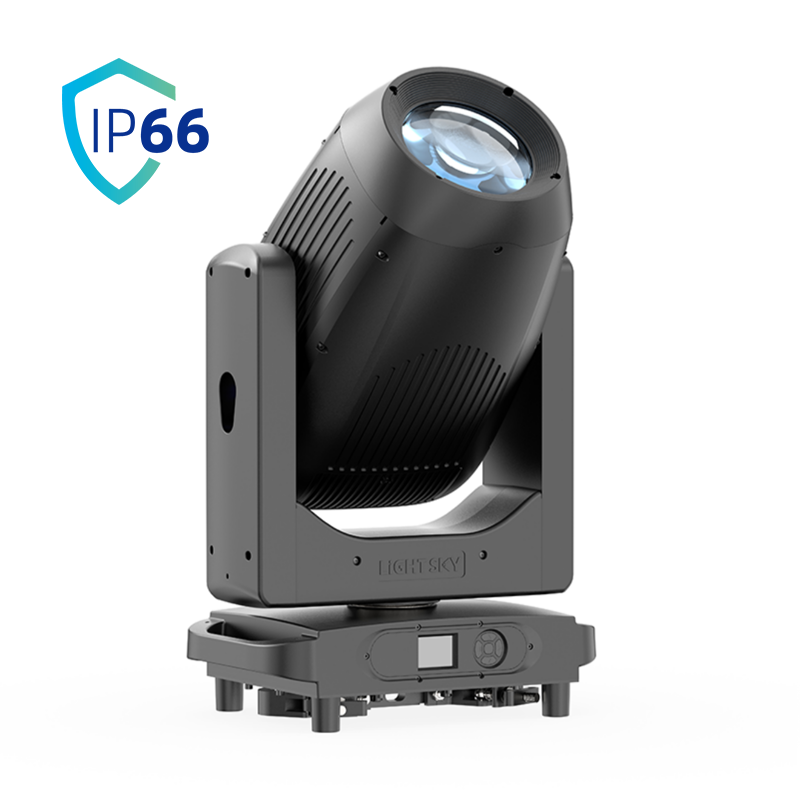
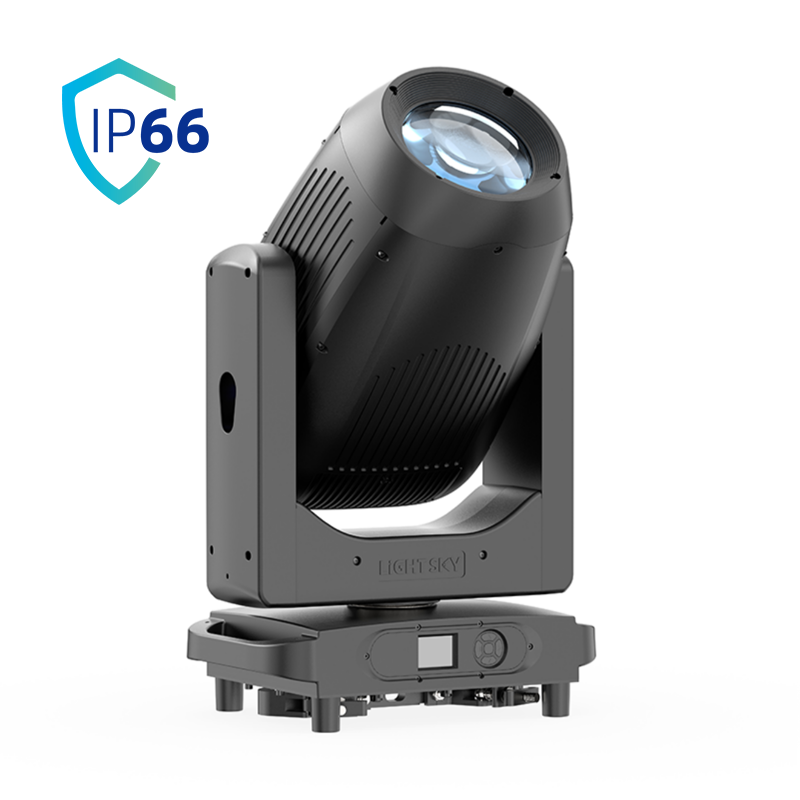
Television studios require lighting that can be adjusted precisely without making every scene dependent on complicated effects. Intensity, color, beam width, framing, and movement all need to work within a controllable production system. We can therefore begin with two practical fundamentals: smooth dimming and reliable control. LiGHT SKY’s SUPER SCOPE AQUA combines a 520W white LED module with beam, spot, wash, and profile functions, while its control system supports DMX512, RDM, Art-Net, and sACN.
Make Smooth Dimming the Starting Point
Dimming determines how naturally a lighting state can change. In a television environment, gradual intensity adjustments can help operators transition between different production scenes without creating unnecessary visual changes.
SUPER SCOPE AQUA provides 0–100% linear electronic dimming with a uniform light spot. Its LED refresh rate is specified from 1000Hz to 25KHz, giving production teams technical parameters to consider when matching the fixture with their camera and control workflow.
The 520W LED BSWP 4in1 Moving head designation describes the fixture’s core configuration: a 520W white LED source combined with beam, spot, wash, and profile functions. For studio planning, this multifunctional structure means one fixture can cover several optical roles instead of treating each role as a completely separate lighting category.
Build Scenes Around Repeatable Control
A studio lighting system becomes easier to operate when common lighting states can be recalled consistently. Instead of creating a different setup for every small change, programmers can organize intensity, color, position, and optical parameters into repeatable cues.
SUPER SCOPE AQUA supports 41-channel and 53-channel control, with compatibility for a 42-channel configuration according to the channel chart. DMX512, RDM, Art-Net, and sACN are supported, while dual RJ45 ports and 3-pin or 5-pin XLR connections provide different options for integrating the fixture into a control network.
This approach is useful when a studio uses multiple lighting fixtures across different zones. Control compatibility becomes part of the system design rather than an afterthought, helping operators manage fixtures through an established lighting-control workflow.
Use Zoom to Adapt Coverage
Television sets can contain presenters, interview areas, scenic elements, and performance spaces at different distances from the lighting position. A fixed beam angle may therefore be less flexible when the same fixture needs to support several production layouts.
SUPER SCOPE AQUA has a 3.8°–50° zoom range. A narrower setting can concentrate the light, while a wider setting can create broader coverage. This optical adjustment allows the same fixture to be configured differently as the studio layout changes.
The waterproof beam spot wash profile concept is particularly relevant when discussing multifunctional fixtures, but the four terms should be understood as separate optical functions. Beam emphasizes concentrated projection, spot supports defined projection and pattern work, wash provides broader illumination, and profile adds controlled framing.
Shape Light Instead of Simply Increasing Output
More light is not always the solution when a television scene requires separation between different areas. Controlling where the beam stops can be equally important, particularly when the fixture is positioned close to scenery, screens, or other lighting zones.
SUPER SCOPE AQUA uses a four-blade framing system with individually controllable blades. The framing module can rotate ±90°, while the blades provide eight-direction cutting. This allows operators to shape the illuminated area rather than relying only on changes in intensity or beam angle.
For a 520W LED BSWP 4in1 Moving head, framing is therefore an important specification to examine alongside output. A fixture that combines optical shaping with dimming gives programmers more ways to control the relationship between the subject, set, and surrounding areas.
Treat Color as Part of the Control System
Color adjustments in a television studio should remain predictable. A production may need neutral white light for one segment and a different color environment for another, so smooth transitions are generally more useful than uncontrolled visual changes.
SUPER SCOPE AQUA uses infinite CMY color mixing and linear CTO adjustment from 3000K to 7000K. It also includes six color filters, blank, and a high-CRI filter. These systems provide several approaches to color adjustment while keeping the changes within the fixture’s programmable functions.
The combination of color mixing and CTO adjustment is especially useful when lighting teams need to coordinate the fixture with other studio sources. Rather than treating color as an isolated effect, operators can incorporate it into the same cue structure as dimming, zoom, framing, and movement.
Keep Movement and Noise Under Control
Moving-head fixtures introduce another consideration for studio applications: mechanical movement and operating noise. The required movement range depends on the position of the fixture and the production layout, while quieter operation can matter when lighting equipment works near microphones.
SUPER SCOPE AQUA provides 540° pan and 270° tilt movement with 8-bit/16-bit precision scanning. It also offers three fan modes—high brightness, standard, and silent—with the manufacturer specifying noise below 40 dB in silent mode.
The waterproof beam spot wash profile configuration also needs to be considered together with environmental requirements. SUPER SCOPE AQUA is rated IP66 and has an operating environment of -20°C to 45°C, giving it a different environmental specification from conventional indoor-only fixtures.
Put Control Before Complexity
A practical TV studio lighting plan does not need to begin with every available effect. Starting with smooth dimming, reliable communication, suitable zoom, controlled framing, and consistent color adjustment provides a more structured foundation for programming.
LiGHT SKY’s SUPER SCOPE AQUA brings these functions together in a 520W LED BSWP 4in1 Moving head. Its 3.8°–50° zoom, 0–100% linear dimming, CMY/CTO color control, four-blade framing system, multiple control protocols, and IP66 construction give lighting teams a range of parameters to evaluate against their specific studio requirements.
From our perspective, the most useful starting point for TV studio projects is not simply how many effects a fixture can produce, but how precisely those functions can be controlled. With that principle established, SUPER SCOPE AQUA can be considered according to the actual production workflow, camera environment, studio layout, and control architecture.