Indoor Concert Lighting Basics: Where SUPER SCOPE PLUS Fits
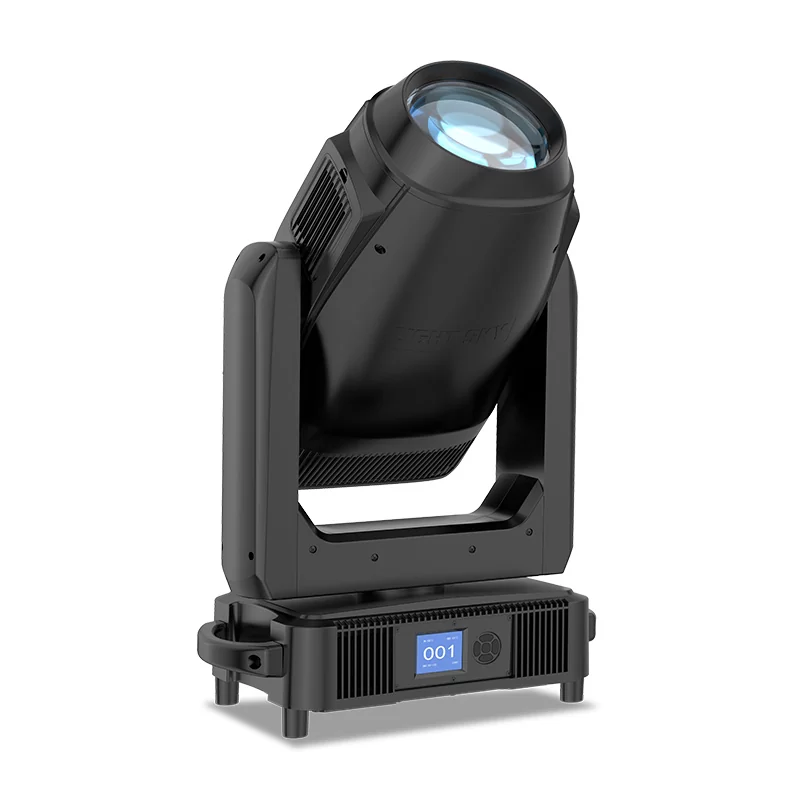
Indoor concerts bring lighting into a controlled environment, but that does not make fixture selection simple. The stage, audience area, scenic elements, performers, cameras, and sightlines all compete for carefully managed light. At LiGHT SKY, we position SUPER SCOPE PLUS as an LED BSWP 4in1 moving head spotlight that combines beam, spot, wash, and profile functions. Its 180 mm optical lens, four-blade framing system, rotating gobos, prism effects, and 5.5°–52° zoom range provide several tools for concert lighting applications.
Start with the Role of Each Fixture
A concert lighting system normally works through different fixture roles rather than relying on one light for every task. Some fixtures establish broad washes, while others provide aerial beams, texture, framing, or focused accents.
An LED moving head spotlight can become particularly useful when a position needs more than simple illumination. The ability to change beam shape, projection, framing, or effects allows lighting designers to adapt the same fixture to different moments within a show.
Beam Shape Affects the Visual Structure
Beam angle is one of the basic considerations when planning indoor concert lighting. A narrow beam can create a more concentrated shaft of light, while a wider angle can cover a larger section of the stage.
The choice depends on fixture distance, stage dimensions, desired coverage, and the visual purpose of each cue. A single beam angle is therefore not automatically suitable for every position or scene.
Zoom systems provide additional flexibility because the projected field can be adjusted without physically relocating the fixture. This can help designers use the same lighting position for different parts of a production.
Framing Helps Define Stage Areas
Concert stages often contain performers, LED screens, scenic structures, instruments, and other objects that need different lighting treatment. Uncontrolled spill can reduce separation between these elements.
A framing system allows light to be shaped around specific areas. The four-blade framing system used by SUPER SCOPE PLUS provides independent blade movement and rotation, giving designers a way to create defined shapes rather than relying only on the fixture’s overall beam.
This function is particularly relevant when a lighting position must isolate a performer, scenic area, or architectural feature within the stage composition.
Color and Diffusion Serve Different Purposes
Color systems influence the atmosphere and visual hierarchy of a concert, but color should work alongside beam control rather than replace it. Different sections of a show may require saturated colors, gradual transitions, neutral tones, or changes in color temperature.
A fixture with CMY color mixing and CTO adjustment provides several approaches to color control. Diffusion serves another purpose: it changes how concentrated or softened the light appears.
These functions should be considered according to the intended cue. A sharply defined projection and a softened stage wash solve different lighting problems, even when they originate from the same fixture.
Projection Adds Texture Beyond Simple Illumination
Concert lighting is not limited to direct light on performers. Patterns and movement can also contribute to the visual organization of a stage.
Rotating gobos can project recognizable or abstract patterns, while animation effects can introduce movement into projected imagery. Prism systems can further transform a concentrated beam into multiple visual elements.
For programming purposes, these effects are most useful when they have a clear relationship with the music, performance structure, or scenic design. Using every available effect simultaneously can make individual cues harder to distinguish.
Movement Needs to Match the Stage Geometry
Pan and tilt movement determine where a moving fixture can direct its output. For indoor concerts, movement should be considered alongside rigging positions, audience sightlines, stage architecture, and the locations of other fixtures.
SUPER SCOPE PLUS provides 540° pan and 270° tilt movement, giving it a broad range of positioning possibilities. Automatic error correction is also listed as part of its movement system.
The practical objective is not simply maximum movement. Designers need predictable positioning so that programmed cues remain consistent throughout the production.
Control Systems Connect the Lighting Design
Modern concert lighting depends on communication between fixtures and the control system. Standard protocols allow lighting data to be distributed through the production network and translated into fixture actions.
SUPER SCOPE PLUS supports DMX512, RDM, Art-Net, and sACN, with both 3-pin and 5-pin signal connections and an RJ45 interface. Its listed control options include 43-channel and 55-channel configurations.
For a production team, compatibility matters because fixture capabilities only become useful when they can be integrated into the existing control architecture and programming workflow.
Consider Noise, Temperature, and Operating Conditions
Indoor concert venues can vary considerably in their technical environments. Fixtures may be installed above performers, near audience areas, or within structures where equipment noise and heat need to be considered.
SUPER SCOPE PLUS provides high-brightness, standard, and silent operating modes, together with intelligent temperature control. The product page specifies an IP20 rating and a working environment of 0°C to 40°C.
These specifications illustrate why environmental conditions should be reviewed before deployment. Brightness, acoustic requirements, ventilation, and installation conditions all influence how a fixture should be used.
Where SUPER SCOPE PLUS Fits
For indoor concert applications, SUPER SCOPE PLUS can occupy positions where several lighting functions are useful within one fixture. Its BSWP architecture combines beam, spot, wash, and profile functions, while framing, gobos, prisms, frost, iris, dimming, and zoom provide additional control options.
At LiGHT SKY, we see this combination as relevant to productions that need flexible visual shaping from moving fixtures. The appropriate application still depends on the venue, rigging position, lighting plot, control system, and creative requirements.
Selecting concert lighting therefore starts with the job each fixture needs to perform. SUPER SCOPE PLUS offers a combination of optical, framing, color, movement, and control functions that can support several indoor concert lighting roles. When those capabilities are matched to the actual stage layout and programming requirements, the fixture becomes part of a structured lighting system rather than simply another source of output.