
Making the Most of a Compact LED Moving Wash for Wedding Receptions
Wedding receptions depend heavily on atmosphere, yet the lighting should remain flexible enough to follow dinner, speeches, first dances, and late-evening celebrations. Commercial lighting suppliers can approach these events more effectively by considering fixture size, coverage, color behavior, and venue conditions together. At LiGHT SKY, we see compact lighting as a practical way to create distinct moods without allowing equipment to dominate the room.
Building the Right Lighting Foundation
Reception spaces often combine several visual areas: the couple’s table, dance floor, dining tables, entrance, stage, and decorative walls. Each zone has a different purpose, so treating the entire room with one lighting level can make the atmosphere feel flat.
Soft, broad illumination works well around dining areas because guests need comfortable visibility throughout the meal. The dance floor, however, can benefit from stronger color changes and more noticeable movement once the evening becomes livelier.
A compact LED moving wash can connect these areas without requiring an extensive fixture package. Its adjustable coverage allows operators to shift from localized accents to broader washes as the program develops, which is especially useful in venues where floor space and rigging positions are limited.
Using Color Without Overloading the Room
Color has an immediate emotional effect at weddings, but more color does not necessarily create a better visual result. Pale tones can complement dinner settings, while deeper hues may suit the transition toward dancing and entertainment. A gradual shift from lighter to richer tones throughout the evening often feels more natural than sudden changes, helping guests adjust to each phase of the event without visual disruption.
The key is to establish a restrained palette before programming individual cues. Warm whites, soft pinks, muted blues, or subtle amber tones can work together without creating unnecessary visual competition with floral arrangements, table settings, or architectural details.
For reception designers, commercial lighting suppliers can be valuable when fixture capabilities are matched to the venue rather than selected solely around output. A smaller wash unit may provide enough flexibility for a ballroom, while a larger space could require additional fixtures to maintain consistent coverage.
One Compact Fixture, Several Possibilities
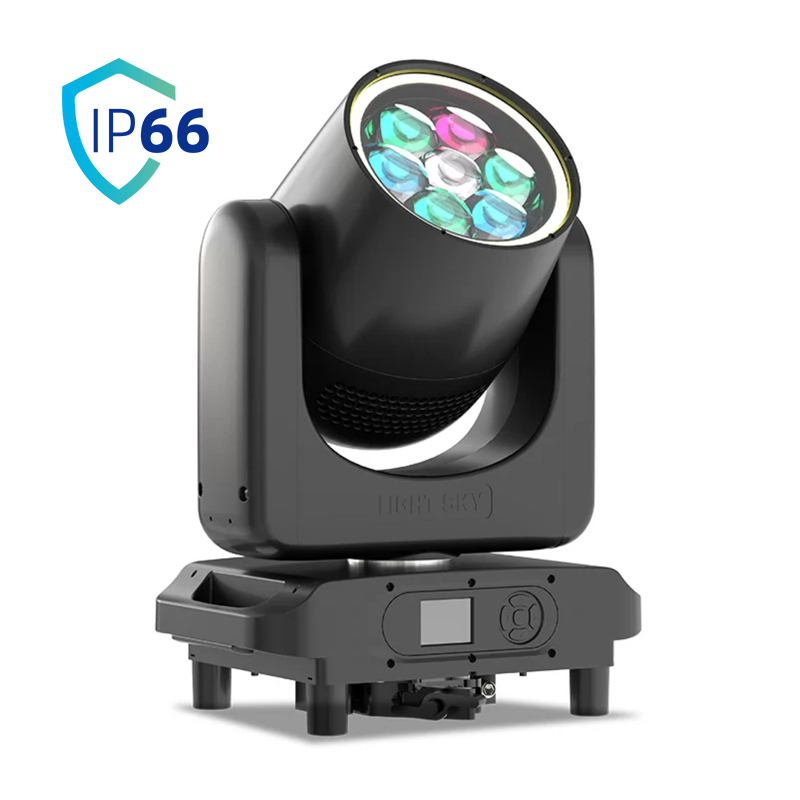
We can look to the AQUAPEARL‑MINI as a practical example. This compact IP66‑rated mini‑LED wash moving‑head fixture works for both indoor and outdoor stage deployments. Equipped with seven 60 W RGBW 4‑in‑1 LEDs, a 360° rotating front lens, and a 4°–50° zoom range, it delivers multiple options for crafting wash‑based visuals. For wedding‑event productions, these capabilities support smooth color transitions, broad room‑filling coverage, and targeted visual accents, all within a compact fixture footprint.
The model can suit productions such as receptions, concerts, exhibitions, TV studios, festivals, and entertainment venues. Its compact format is particularly relevant when the lighting plot has to coexist with decorative structures, seating, catering equipment, or temporary staging.
Rather than relying on the product for every lighting task, we would use it selectively: broad coverage during general reception moments, controlled color accents during speeches, and more dynamic movement once the dance floor becomes active.
Shaping Different Moments of the Evening
A wedding reception rarely maintains one atmosphere from beginning to end. The lighting language can evolve alongside the schedule, beginning with calm and understated looks before gradually becoming more expressive.
During guest arrival, lower-intensity washes can provide a welcoming background while preserving the visual detail of the venue. Speeches call for a calmer state, with less movement and fewer saturated colors so attention stays on the speaker.
Once music becomes the focus, LED moving wash fixtures can introduce greater movement and color variation. A gradual transition usually feels more natural than an abrupt shift, particularly when the reception moves from formal dining into open dancing.
Considering Venue Size and Placement
Fixture placement has a major effect on perceived coverage. Units positioned too close to walls may create concentrated hotspots, while excessive distance can weaken color intensity and reduce the definition of scenic details.
For smaller wedding venues, compact fixtures can be placed around the perimeter or integrated into discreet floor positions. Larger ballrooms may require multiple angles so that the wash remains balanced across the dance floor and surrounding scenery.
Programming should also account for reflective surfaces. Mirrors, polished floors, glass décor, and metallic structures can produce unexpected reflections, making careful positioning more important than simply increasing output.
Conclusion
Successful wedding lighting comes from matching technical choices with the rhythm and character of the celebration. Commercial lighting suppliers can help production teams think beyond fixture quantity by considering coverage, color, placement, and cue transitions as parts of one visual system. A flexible LED moving wash approach can then provide enough variation to move naturally from welcoming guests to speeches and dancing. At LiGHT SKY, we focus on practical fixture capabilities and adaptable lighting concepts so each reception can develop its own atmosphere without unnecessary visual complexity.