
LiGHT SKY SUPER SCOPE PLUS for Indoor Awards Ceremonies: Simple Creative Possibilities
An awards ceremony depends on more than the stage, screens, and presenters; visual rhythm also affects how the audience understands each important moment. LED BSWP 4-in-1 moving head spotlight technology can bring beam, spot, wash, and profile functions into one lighting concept, giving designers more options without making the visual language unnecessarily complicated. At LiGHT SKY, we approach ceremony lighting by considering sightlines, camera positions, stage architecture, and the emotional pace of each segment before selecting effects.
Lighting intensity should follow the significance of the moment rather than remain equally strong throughout the program. Opening sequences may benefit from broader coverage, while an award presentation often needs controlled illumination around the presenter and recipient. This contrast creates visual hierarchy without relying on excessive movement.
Color also deserves careful planning. Neutral tones can establish an elegant foundation, while carefully timed color changes may distinguish categories, performances, or transitions. The most convincing results usually come from restraint: each effect has a defined purpose instead of competing for attention.
Creating Depth Across The Stage
Large indoor stages often contain several visual layers, including LED walls, scenic structures, podiums, and performers. LED BSWP 4-in-1 Moving Head spotlight fixtures can contribute to this layered composition by shifting between concentrated beams and wider coverage, allowing the lighting plot to respond to different areas of the set.
Beam direction matters just as much as brightness. Fixtures positioned from different angles can create separation between foreground presenters and background scenery, while carefully selected projection areas keep the visual field readable for both spectators and cameras.
From our point of view, a useful lighting plot should also consider negative space. Leaving certain areas darker gives brighter elements greater visual importance, particularly during award announcements. We find this approach can make a relatively simple stage design feel more dimensional without adding unnecessary scenic elements. We also encourage taking a few minutes to walk the stage and view the set from camera positions, because this step often reveals imbalances that are less obvious from the control position. As experienced theatre lighting suppliers, we often assist production teams in adjusting fixture angles and intensity levels to accommodate both live‑audience viewing and broadcast framing.
Why Versatility Matters In Indoor Productions
One fixture may serve several visual roles during a long ceremony, but versatility is valuable only when the functions remain controllable. LED BSWP 4-in-1 moving head spotlight systems are particularly useful when a production moves rapidly between speeches, award moments, entertainment segments, and closing sequences.
For lighting teams, consistency between different looks can simplify programming. Beam effects may establish an energetic transition, wash coverage can support a performance, and profile functions can define architectural details. Switching between these roles gives the operator a broader creative vocabulary within the same production environment.
Theatre and television environments also place different demands on lighting. Camera exposure, skin-tone rendering, reflections from screens, and sightlines all influence fixture placement. A visually attractive effect from the audience perspective may require adjustment once viewed through multiple camera angles.
A Practical Fixture Example From LiGHT SKY
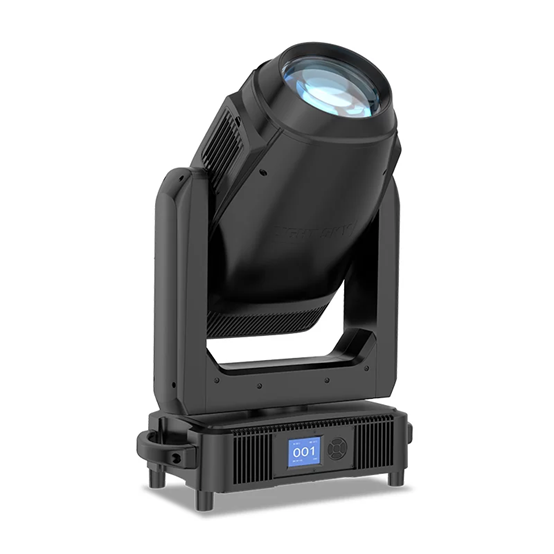
For indoor ceremonies requiring strong output and flexible visual control, we offer SUPER SCOPE PLUS as an example of this approach. The fixture combines beam, spot, wash, and profile functions, with 41,000 lm output and a 180 mm precision lens. Its design is intended for professional indoor applications such as theaters, TV studios, concerts, stadiums, and large venues, where brightness and long-range projection are important considerations.
The value of this type of fixture is less about using every function simultaneously and more about having different tools available within one lighting system. A designer can establish a concentrated look for an announcement, broaden coverage for a performance, then return to more controlled projection as the ceremony resumes.
Programming Moments Rather Than Simply Effects
Good ceremony lighting follows the structure of the show. Cue timing should relate to entrances, speeches, envelope openings, winner announcements, photographs, and applause rather than operating independently from the stage action.
Color transitions can mark changes in mood, while movement can signal a shift between sections. During an award presentation, slower transitions may preserve attention around the recipient; during an entertainment segment, faster changes can support musical phrasing and stage movement.
Programming also benefits from consistency. Similar moments can share visual characteristics while still receiving subtle variations, helping the audience recognize recurring sections without making the show feel mechanically repetitive. Having a clear cue structure written out before programming begins helps keep the design focused on the event’s flow rather than on individual effects.
Conclusion
An indoor awards ceremony becomes visually stronger when lighting choices reinforce the story instead of overwhelming it. Careful fixture placement, controlled color, thoughtful cue timing, and purposeful changes in beam shape can create depth while keeping attention where it belongs. At LiGHT SKY, we take these practical factors into account when developing professional lighting solutions. Our goal is to deliver production teams useful creative flexibility rather than simply adding more effects.