
Easy Visual Layers for Outdoor Awards Ceremonies with a Waterproof 4-in-1 BSWP Moving Head
Outdoor awards ceremonies demand more than strong illumination. The stage must remain readable as daylight fades, camera angles shift, and the visual pace moves from formal announcements to celebratory moments. A 520W LED BSWP 4-in-1 Moving Head can be considered within this kind of production because combining several optical functions in one fixture gives the lighting plan more room to adapt. At LiGHT SKY, we view outdoor lighting as a balance between visual hierarchy, weather conditions, stage geometry, and the practical needs of the crew.
Designing Layers Instead of One Flat Stage Look
A ceremony often contains several visual priorities at once: presenters, award recipients, branding surfaces, architectural elements, and cameras. Treating all of them with identical intensity can flatten the scene. Layered lighting separates these elements through different angles, beam widths, colors, and brightness levels.
The background can carry broader illumination while narrower effects define transitions or important moments. This creates depth without requiring every fixture to operate at maximum output. Such restraint is particularly valuable during speeches, where excessive movement can distract from the person receiving attention.
The role of the stage lighting designer therefore extends beyond selecting powerful fixtures. Spatial judgment matters just as much. A designer needs to consider where beams terminate, how shadows fall across the stage, and whether the visual composition still works from audience seating and camera positions.
Using One Fixture Across Multiple Visual Roles
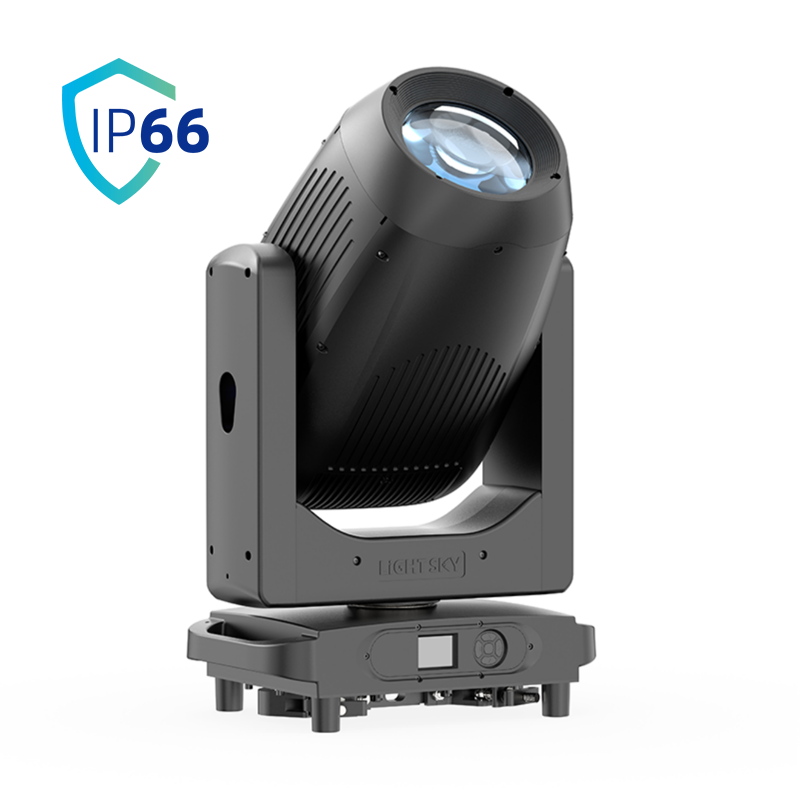
SUPER SCOPE AQUA combines beam, spot, wash, and profile functions in one waterproof 520W LED fixture. Its four-in-one configuration can support changing requirements across an outdoor ceremony, allowing one unit to contribute to different visual scenes instead of assigning every task to a separate fixture. This is where the fixture can be useful as part of a broader production strategy rather than becoming the focus of the show.
A 520W LED BSWP 4-in-1 Moving Head also makes cue planning more flexible because beam, spot, wash, and profile functions can serve different parts of the program. The key is to assign each mode a specific visual purpose. A wide wash may support a presentation, while a tighter effect can mark an award announcement or musical transition.
Such flexibility does not mean every function should appear simultaneously. Strong visual design often comes from changing only one or two parameters at a time. Keeping the surrounding scene relatively stable allows a new effect to register clearly without creating unnecessary visual competition.
Managing Outdoor Environmental Variables
Outdoor ceremonies introduce variables that indoor venues can partially control. Wind can affect scenic elements, ambient light changes throughout the event, and moisture becomes an important equipment consideration. Fixture selection therefore needs to account for the physical environment as well as optical performance.
A waterproof fixture can be particularly relevant when equipment is exposed to outdoor conditions. However, weather resistance should not replace sensible production planning. Cable protection, connector placement, drainage, mounting security, and equipment inspection remain important parts of the technical setup.
For a stage lighting designer, environmental conditions also influence programming decisions. A look that works during daylight may need considerably different intensity and contrast after sunset. Building several cue states around those changing conditions gives operators more practical control during the event.
Shaping Award Moments With Controlled Movement
Movement has a different role in a ceremony than it does in a concert. Rapid sweeping effects may suit a musical climax, yet an award presentation usually benefits from more measured transitions. Slow pan or tilt changes can shift attention toward a new part of the stage without competing with the presenter.
Beam direction can also reinforce the physical structure of the venue. Fixtures positioned from different elevations create intersecting lines, while carefully selected angles can frame the central presentation area. The visual result becomes more dimensional without relying entirely on additional scenic pieces.
Timing matters just as much as direction. A lighting change that arrives slightly before an announcement can create anticipation; another that follows the announcement may emphasize the celebratory response. Programming should therefore follow the event script rather than treating movement as an independent layer.
Creating Camera-Friendly Visual Composition
Awards ceremonies are frequently photographed or broadcast, making camera compatibility an essential part of lighting design. Strong backlight can add depth, but excessive intensity may reduce facial detail. Likewise, highly saturated colors can affect skin tones and make sponsor graphics harder to reproduce accurately.
A thoughtful 520W LED BSWP 4-in-1 Moving Head setup can divide responsibilities between front, side, and rear positions. This arrangement gives operators more options when balancing faces, scenic surfaces, and effects. Camera tests during rehearsal are especially valuable because the perceived contrast on screen may differ from what the audience sees directly.
Consistency across camera angles should also be considered. A visually attractive look from the main audience position may become uneven from a side camera. Checking several viewpoints helps identify dark zones, unwanted flare, or distracting fixture movement before the ceremony begins.
Building a Practical Cue Structure
Programming becomes easier when every cue has a clear purpose. Instead of creating numerous variations that differ only slightly, designers can establish distinct states for guest arrival, presentation, award announcements, transitions, and the final celebration. This makes the show file easier to navigate under pressure.
The stage lighting designer can also organize fixture groups according to physical position or visual role. Such grouping allows changes to be made quickly if the stage layout shifts during rehearsal. A modular approach is especially useful outdoors, where event conditions may require adjustments close to show time.
At LiGHT SKY, we consider technical flexibility part of visual planning rather than a separate concern. Outdoor ceremonies benefit from lighting systems that can respond to changing ambient conditions, camera requirements, and program pacing while keeping the visual language coherent.
Conclusion
A polished outdoor awards ceremony does not depend on filling every available space with effects. Stronger results usually come from assigning each lighting layer a clear function, then allowing contrast, movement, and timing to shape the audience’s attention. The versatility of a 520W LED BSWP 4-in-1 Moving Head can support this approach when its multiple optical functions are integrated thoughtfully into the wider rig. With careful environmental planning and disciplined cue design, we at LiGHT SKY regard the lighting system as a flexible visual framework—one that can adapt as the ceremony shifts from formal recognition to its final celebratory moment.