
LiGHT SKY SUPER SCOPE AQUA For Museum Courtyard Shows: Simple Creative Possibilities
Museum courtyard performances occupy an unusual space between architecture, storytelling, and live entertainment. The audience may be surrounded by historic walls, sculptures, trees, or carefully designed landscapes, so lighting has to add atmosphere without masking those visual features. A thoughtful 4-in-1 LED moving BSWP approach can help create distinct layers, from restrained architectural washes to sharply defined accents. At LiGHT SKY, we see this kind of production as an exercise in visual balance: the lighting should enrich the setting while allowing the museum itself to remain part of the story.
Let Architecture Shape The Lighting Concept
Historic courtyards often provide strong geometric references. Columns, arches, stairways, windows, and pathways can become natural boundaries for lighting scenes. Rather than covering every surface equally, designers can select a few architectural elements and give each one a deliberate visual role.
Scale also affects the perceived intensity of a scene. A small courtyard may require restrained coverage because nearby surfaces reflect light directly toward visitors. Larger spaces can accommodate greater separation between fixtures and illuminated structures, creating more depth between foreground and background.
Perspective deserves attention during programming as well. Visitors rarely remain in one position throughout an outdoor museum show. Lighting that looks balanced from the central viewing area may appear very different from a side pathway, so rehearsal should include several audience viewpoints.
Creating Layers Without Overloading The Courtyard
Layering gives a performance more visual dimension than simply increasing brightness. Background illumination can establish the atmosphere, while narrower accents define entrances, exhibits, performers, or architectural details. The contrast between these levels helps audiences understand where to look without relying on constant movement.
We find color can reinforce this hierarchy. We may use cooler tones to support historical or reflective sections, while warmer values can create a more intimate mood during storytelling. We also regard neutral scenes as equally useful, because they provide visual pauses between stronger color sequences.
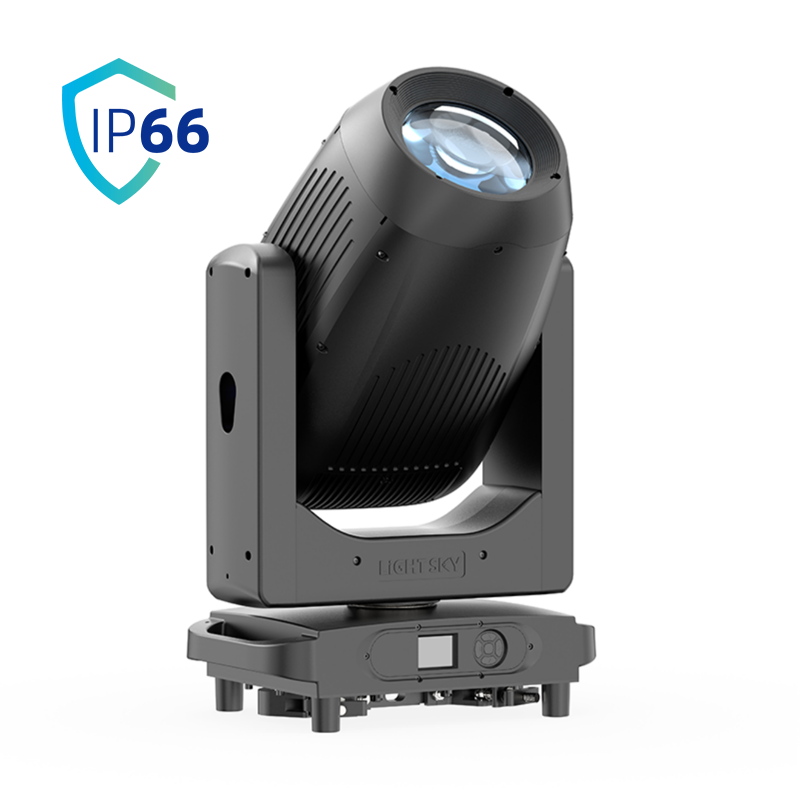
A flexible 520W LED BSWP 4-in-1 Moving Head can contribute to this type of programming by combining several lighting functions within one fixture. The SUPER SCOPE AQUA features a 520W LED source, beam, spot, wash, and profile functions, plus a 3.8°–50° zoom range. Its four-blade, eight-direction framing system supports ±90° rotation, allowing the light shape to be adjusted around selected architectural features. IP66 protection, temperature control, and silent fan modes also make the fixture suitable for outdoor production environments.
Using Framing To Respect Museum Details
Projection control becomes particularly useful when a courtyard contains objects that should remain visually untouched. A shaped beam can be positioned around a sculpture or restricted to a wall section rather than spilling across the entire façade. This approach keeps the lighting design connected to the architecture instead of treating the venue as an empty stage.
Framing can also divide a broad performance area into separate visual zones. One section might hold musicians, another could accommodate presenters, and a third might contain a projection surface. Carefully shaped illumination helps these areas coexist without competing equally for attention.
The principle extends to temporary installations. If an exhibition includes fragile-looking visual elements or carefully composed displays, designers can adjust the illuminated boundaries during rehearsal. Such precision is especially valuable in locations where the physical environment carries as much meaning as the performance itself.
Designing Movement Around The Story
Movement works best when it has a reason within the production. A slow repositioning can accompany a transition between historical periods, while a faster change may suit a musical interlude. Leaving some fixtures static is equally important because a continuously moving stage can make architectural surroundings feel visually unstable.
Cue construction should follow the rhythm of the show rather than the capabilities of the fixture. A dramatic lighting transition can be saved for a genuine narrative change. Smaller shifts in position, color, or intensity can then maintain continuity during quieter sections.
For museum events, restraint often creates stronger contrast. After several subdued scenes, a carefully timed beam movement may feel much more significant than it would in a production filled with constant effects. This makes programming decisions part of the storytelling rather than merely technical changes.
Balancing Outdoor Conditions With Audience Comfort
Courtyard productions face practical variables that indoor theatres can largely control. Humidity, temperature, ambient city light, reflective stone, and changing sightlines all affect the final appearance. The lighting plan should therefore be evaluated under actual evening conditions instead of relying entirely on daytime measurements.
Audience comfort deserves equal consideration. Strong beams aimed too close to eye level can become distracting, particularly when visitors are walking between viewing areas. Fixture height, tilt, beam direction, and intensity should be assessed together so that visual impact does not come at the expense of comfortable viewing.
Control preparation can simplify those adjustments. Clearly organized cues allow operators to respond quickly if ambient conditions change after sunset. At LiGHT SKY, we approach outdoor programming with this practical perspective, treating flexibility as part of the creative process rather than as an afterthought.
Conclusion
We believe museum courtyard performances gain their unique artistic charm from the organic combination of performance content and venue characteristics. We achieve more effective lighting results when we fully respect the site’s original proportions, material textures, pedestrian pathways, and inherent cultural temperament. We adopt the 4-in-1 LED moving BSWP design to enrich diverse scene presentations without stacking conflicting visual effects. Precise lens framing and dynamic movement allow us to accurately control visual focus and hierarchical emphasis. We apply the 520W LED BSWP 4-in-1 Moving Head, an all-in-one indoor fixture that integrates beam, spot, wash, and profile functions to deliver layered and flexible lighting output. At LiGHT SKY, we always adhere to adaptive visual planning. We empower production teams to develop creative lighting schemes while fully preserving and highlighting the cultural and spatial characteristics of museum environments.