
White Laser Light for Stage: How It Outperforms Traditional Discharge Sources
As stage lighting continues to evolve, white laser light technology is increasingly evaluated as a practical alternative to traditional discharge lamps. Compared with conventional light sources, white laser light provides higher beam coherence, more stable output, and improved control over projection characteristics. In professional touring and fixed installations, LiGHT SKY integrates this technology into modern fixtures to meet the growing demand for precision and consistency. Solutions such as the laser moving head light and advanced head beam light systems demonstrate how optical engineering can refine beam quality while supporting complex stage programming. This article examines how white laser light performs against traditional discharge sources in real-world stage applications.
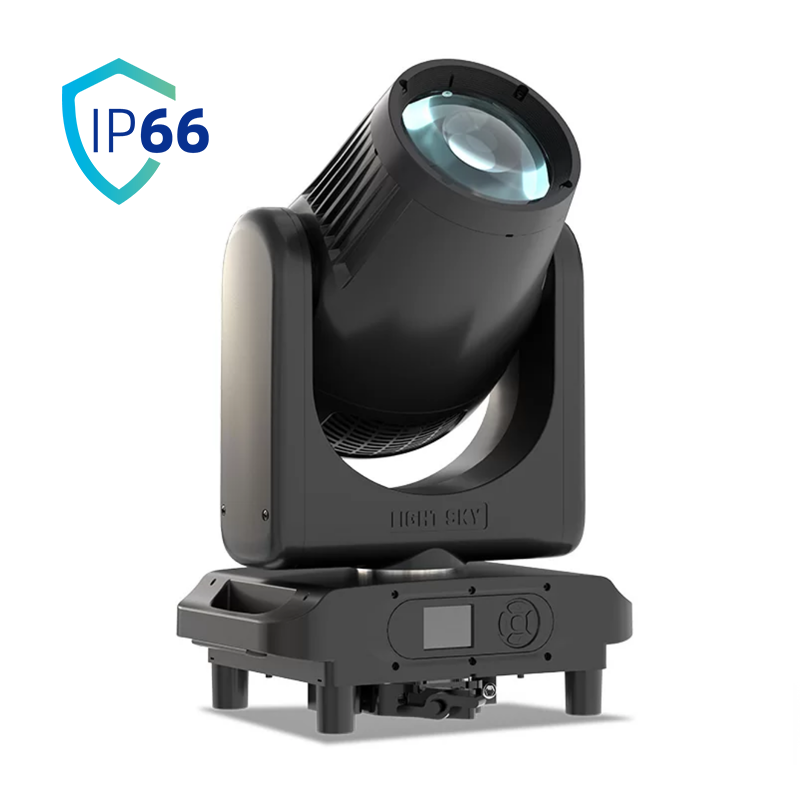
Advances in White Laser Light Source Technology
Modern white laser light systems rely on compact, high-efficiency laser modules to achieve stable illumination. LiGHT SKY’s MINI LASER AQUA exemplifies this approach with its 100W white laser light engine designed for professional environments. The system delivers a tightly controlled beam through ultra-narrow 1.1° optics and a 128mm front lens, ensuring minimal divergence even over long distances. With an intensity reaching up to 350,000 lux at 10 meters, this white laser light source provides strong visibility without relying on high-energy discharge lamps. Compared to traditional systems, the laser-based architecture also improves response time and beam consistency in dynamic stage environments.
Performance Advantages in Head Beam Light Applications
In head beam light configurations, white laser light offers significant advantages in brightness consistency and directional precision. Unlike discharge sources that may require warm-up time, a head beam light using laser technology achieves near-instant output stability. This is particularly valuable in touring shows where rapid cue changes are essential. The laser moving head light design also enhances beam accuracy, allowing lighting designers to maintain tight aerial effects across large venues. In addition, white laser light reduces beam degradation over distance, ensuring that the head beam light remains defined even in complex atmospheric conditions.
Laser Moving Head Light Design and Stage Integration
Integration flexibility is a key strength of modern laser moving head light systems. LiGHT SKY incorporates white laser light modules into compact, weather-resistant housings suitable for both indoor and outdoor use. The MINI LASER AQUA demonstrates this with its rugged structure designed for demanding stage environments and outdoor sky laser light applications. Its optical laser system supports dynamic color effects and precise beam control, making it suitable for synchronized stage programming. By combining durability with advanced optics, LiGHT SKY enables white laser light fixtures to adapt seamlessly to diverse production requirements while maintaining stable performance.
Why White Laser Light is Redefining Stage Illumination Standards
The transition toward white laser light represents a shift in how stage illumination is engineered and applied. Compared to traditional discharge sources, it offers improved efficiency, stability, and beam control across head beam light and laser moving head light systems. For manufacturers like LiGHT SKY, this technology provides a foundation for developing more compact and precise lighting tools that align with modern stage design needs. As adoption continues, white laser light is expected to play a growing role in shaping the future of professional stage lighting systems.