
Where Professional Stage Lighting Fits Into Awards Ceremonies
An awards ceremony depends on timing, recognition, and atmosphere, yet the visual design should never compete with the people being recognized. Lighting can quietly establish the mood during speeches, give an award presentation greater emphasis, and make the transition between segments feel intentional. For a stage lighting manufacturer, that means understanding how illumination interacts with stage layout, camera positions, audience sightlines, and the emotional rhythm of the program. At LiGHT SKY, we approach these considerations as part of the wider production process, where technical choices should support the ceremony rather than dominate it.
Give Recognition Moments A Distinct Visual Rhythm
Not every section of an awards ceremony needs the same intensity. A presenter introducing a category may require balanced, comfortable illumination, while the winner’s entrance can benefit from a more concentrated visual focus. Short changes in color or beam direction can separate these moments without requiring elaborate programming throughout the entire show.
The sequence of lighting cues also deserves attention. If every transition uses movement, color changes, and effects simultaneously, the audience may have difficulty distinguishing one moment from another. A restrained base look creates room for more noticeable cues during award announcements, stage entrances, performances, and closing celebrations.
Good ceremony design often comes from contrast: stable visual states provide continuity, while carefully timed changes mark the moments that matter.
Shape Attention Without Overloading The Stage
An awards stage frequently combines LED screens, scenic elements, podiums, logos, and decorative structures. Each component already contributes visual information, so adding excessive lighting effects can make the composition feel crowded. Beam direction and intensity should instead help establish a hierarchy between the presenter, recipient, background, and supporting visuals.
Audience position matters as well. A fixture aimed toward a camera may look effective through the lens but become uncomfortable for people seated directly beneath or beside its path. Testing different angles during rehearsal allows the production team to identify glare, unwanted reflections, and areas where the stage appears uneven.
The strongest visual focus is usually created through deliberate distribution of light rather than sheer quantity.
Understand The Role Of A Moving Head Spotlight
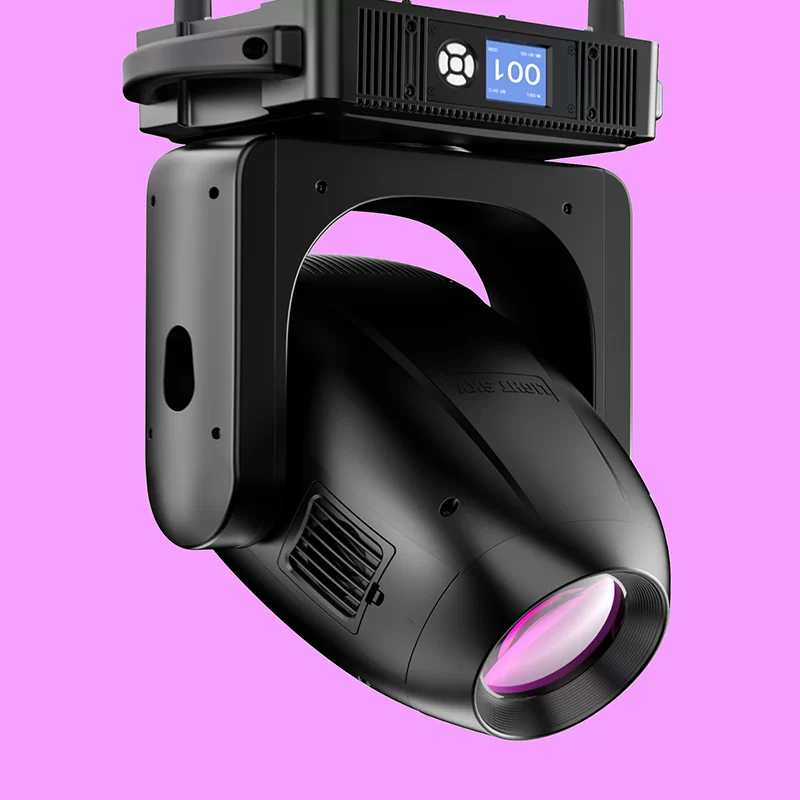
A moving head spotlight can serve several purposes within a ceremony because its direction and optical characteristics can be adjusted as the program changes. A narrow beam may define an entrance, while a wider setting can provide coverage for a larger stage area. Movement can also help reposition illumination without physically relocating the fixture.
For indoor productions requiring multiple optical functions, the SUPER SCOPE II offers beam, spot, wash, and profile capabilities in one fixture. Its official specifications list a 520W white LED module, a 3.8°–50° zoom range, a 140 mm coated front lens, 20,000 lm total output, and four independently rotating framing blades with ±60° movement. The model is specified for venues such as theaters, TV studios, concerts, stadiums, and other professional indoor settings.
These specifications show why optical range can matter more than a simple brightness figure: one fixture can be adapted to different stage distances and visual tasks, provided its characteristics match the production requirements.
Make Lighting Work With Cameras And Screens
Modern awards ceremonies are rarely experienced only from the seats. Broadcast cameras, livestreams, social media clips, and event photography can all become part of the final presentation. Lighting that looks balanced in person may produce excessive contrast or unwanted color on camera, particularly around reflective trophies, glossy stage surfaces, and large LED displays.
A useful approach is to separate functional illumination from atmospheric effects. Presenters and recipients need consistent facial visibility, while backgrounds can carry more variation. This distinction helps cameras capture expressions clearly while allowing the scenic environment to retain its visual character.
We find that camera testing before the ceremony can uncover issues with exposure, color balance, screen interaction, and beam visibility before they affect the live program.
Select Equipment According To The Production Environment
Procurement decisions should begin with the venue rather than a generic list of desirable features. Ceiling height, throw distance, available rigging, power capacity, noise requirements, control infrastructure, and stage dimensions can all affect fixture suitability. A stage lighting manufacturer should therefore be evaluated through the technical information it provides as well as the fixture itself.
At LiGHT SKY, we have developed professional lighting equipment since 1993, with a 50,000 m² factory and R&D center and more than 200 patents. Our work combines R&D, manufacturing, distribution, OEM, and ODM capabilities, allowing project discussions to consider the wider requirements behind a lighting system.
For buyers, useful documentation should make it possible to compare optical parameters, control options, power requirements, physical dimensions, and operating conditions before the equipment reaches the venue.
Conclusion
We find an awards ceremony gains visual strength when lighting gives each part of the program an appropriate level of attention. We do not think the opening, presentation, nomination, winner announcement, photo moment, and closing sequence have to look identical, nor do they require a completely different lighting setup. We believe thoughtful cue design can create distinction while preserving a coherent visual identity throughout the event.
At LiGHT SKY, we believe the most useful lighting decisions begin with the story the ceremony needs to tell. We believe a team working with a moving‑head spotlight can then assess beam control, zoom, framing, color, movement, and placement against the actual stage conditions. Once we understand those practical factors, conversations with a stage‑lighting manufacturer become more focused, and we can judge technical specifications by how effectively they serve the people and moments at the center of the ceremony.