
Using AQUAPEARL-PRO II To Refresh The Look Of Orchestra Performances
Orchestral performances rely on subtle visual cues rather than constant spectacle. The musicians, conductor, instruments, and architectural setting all need to remain visually connected, while lighting changes should respect the character of the music. A well-planned LED wash moving head can introduce depth, color, and carefully controlled movement without overwhelming the performers. At LiGHT SKY, we approach concert lighting by considering how illumination interacts with the score, stage composition, audience sightlines, and the natural rhythm of each performance.
Preserving The Focus On Musicians
An orchestra creates a dense visual arrangement, with multiple musicians occupying different sections of the stage. Lighting that is too strong or uneven can make some performers visually dominant while leaving others difficult to distinguish. A balanced general wash across the ensemble, with subtly varying intensity between sections, can help the audience read the orchestra as a cohesive unit rather than a collection of separate individuals.
The conductor usually requires particularly clear visibility because gestures communicate tempo and expression. Front illumination should therefore remain consistent enough to reveal movement while avoiding excessive glare from instruments or music stands.
Background treatment can provide another layer of depth. Rather than covering every scenic surface with saturated color, designers may use restrained tones behind the orchestra and slightly stronger accents around architectural features. Such contrast helps frame the ensemble without competing with the music.
Using Color To Support Musical Mood
Color has a psychological and visual influence on how an audience perceives a performance. Cooler hues can create a spacious, restrained atmosphere, whereas warmer tones may make the stage feel more intimate.
Music itself can guide these decisions. A dramatic passage might accommodate deeper contrast, while quieter sections often benefit from softer transitions. The lighting should respond to the emotional structure without attempting to illustrate every musical phrase literally.
An effective moving head wash light setup can also vary coverage between sections of the program. Wide illumination may suit the full ensemble, while more concentrated output can draw attention toward a soloist or featured group when the staging calls for it.
Creating Depth Without Visual Noise
Orchestral stages often contain layered elements such as risers, curtains, acoustic panels, screens, and decorative architecture. Treating every layer with the same brightness can flatten the composition.
Instead, designers can establish foreground, middle-ground, and background relationships. Musicians should remain readable first, scenic elements can sit slightly behind them, and architectural surfaces may receive selective accents that reveal texture.
Movement requires similar restraint. Rapidly moving fixtures can distract an audience from a complex musical passage, whereas slow positional changes may introduce subtle variation during transitions. The visual effect becomes more convincing when movement has a clear purpose.
AQUAPEARL-PRO II In Practice
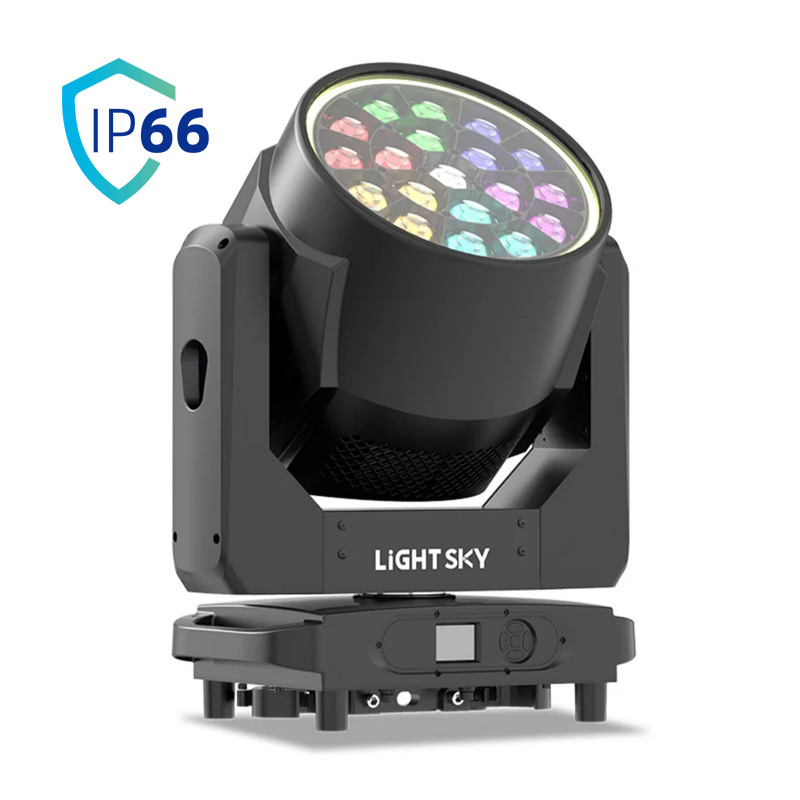
AQUAPEARL-PRO II combines individually controlled RGBW LEDs with a rotating front lens and separately controlled halo LEDs. Its 5°–45° optical zoom allows narrower beam treatments as well as broader wash coverage, while the rotating lens can create vortex and kaleidoscopic effects in the air. IP66 protection supports demanding indoor and outdoor stage environments, although the fixture should always be selected and installed according to the specific venue conditions.
For an orchestra, these functions can be used selectively rather than simultaneously. Individual LED control may introduce restrained color patterns behind the ensemble, while the front halo can add a secondary visual layer during entrances or transitions. The optical range also provides flexibility when stage layouts change between a full orchestral arrangement and smaller chamber-style sections.
Coordinating Cues With The Performance
Lighting cues should follow the structure of the production instead of operating as an independent visual show. Rehearsals provide valuable opportunities to identify moments where a transition might interfere with a conductor’s gestures, a soloist’s position, or a particularly quiet musical passage.
Cue timing can also be linked to entrances, intermissions, solo sections, and curtain movements. Gentle fades are generally less disruptive during formal passages, while stronger changes can be reserved for clearly defined transitions.
Technical coordination matters beyond the lighting console. Cameras, projection systems, scenic elements, and house lighting can all influence the final appearance. A lighting plot that looks balanced from the control position may require adjustment once viewed from the audience or through a camera. Checking the plot from several audience seats and the camera feed before the final rehearsal often catches these discrepancies early.
Conclusion
Orchestra lighting works best when visual design supports rather than competes with musical expression. Careful attention to intensity, color, depth, fixture position, and cue timing can make a large ensemble easier to read while preserving the atmosphere of a live concert.
Used thoughtfully, an LED wash moving head can provide enough flexibility to shape different sections of a performance without forcing every musical moment into the same visual treatment. A moving head wash light can similarly contribute controlled changes in coverage and atmosphere when movement is kept purposeful. At LiGHT SKY, we value lighting approaches that give production teams creative freedom while respecting the concentration, detail, and emotional character of orchestral performance.