
Planning Museum Courtyard Programs With A Waterproof Moving Head Light In Mind
Museum courtyards can change character dramatically after sunset. Stone walls, sculptures, trees, pathways, and open sky create a setting unlike a conventional theater, while cultural programs may shift from speeches and exhibitions to music or performances. For planners, a waterproof moving head light can introduce controlled movement and directional accents without turning every architectural feature into a stage effect. At LiGHT SKY, we approach such applications by considering the venue, visitor circulation, weather exposure, and artistic purpose together.
Understand The Courtyard Before Programming
Historic architecture often provides its own visual language. Columns, arches, textured walls, sculptures, and garden features can establish depth without additional scenery. Lighting works more effectively when these existing elements are considered first, allowing selected surfaces to receive illumination while less important areas remain visually quiet.
Visitor movement adds another layer. Museum courtyards may contain several entrances, walkways, seating areas, and access routes, so the lighting plan should account for how people move through the space. Fixtures positioned solely according to the stage may create uncomfortable glare elsewhere, particularly when visitors approach from unexpected directions.
Good planning begins with the physical environment rather than with programmed effects.
Adapt Visual Intensity To The Program
Museum events rarely maintain one pace throughout the evening. A curator’s talk, student performance, musical presentation, and reception each communicate differently. Lighting intensity and movement can reflect those distinctions, helping audiences recognize transitions without requiring dramatic changes in scenery.
Subtle shifts are often sufficient. Lower-intensity illumination can support speeches and discussions, while stronger color or movement may suit a performance segment. Keeping several independent lighting states gives operators room to respond if the schedule changes or a particular activity takes longer than expected.
Visual contrast becomes more useful when it has a clear connection to the event’s content.
Give Moving Fixtures A Defined Role
We understand that the broad category of moving heads lighting covers devices with vastly different optical functions. We use beam fixtures to concentrate light into narrow projections, while wash‑type units deliver wide‑area illumination. When we choose between these two fixture types, we take stage dimensions, throw distance, required coverage range, and target visual effects into comprehensive consideration.
Museum courtyards can benefit from directional movement during selected moments. A beam may travel across an open architectural surface, frame a performance entrance, or create depth above the audience. Movement should remain carefully positioned, however, because rapid or low-angle projections may distract visitors rather than enhance the program.
Purposeful movement tends to have more visual value than continuous motion.
Consider Outdoor Protection From The Start
Outdoor installations face moisture, dust, temperature changes, and sudden rainfall. These factors affect more than the fixture housing itself. Connectors, cables, power distribution, mounting points, and drainage should all be reviewed before equipment is installed.
Ingress protection provides an important reference when evaluating outdoor fixtures, but the rating should not replace proper installation practices. Technical teams still need to consider where water could collect, how cables are routed, and whether visitors can approach equipment. Museum environments may also require additional attention to protected architectural areas and restricted access zones.
Environmental planning becomes much easier when it is incorporated into the initial lighting concept.
MINI WHALE In A Practical Outdoor Application
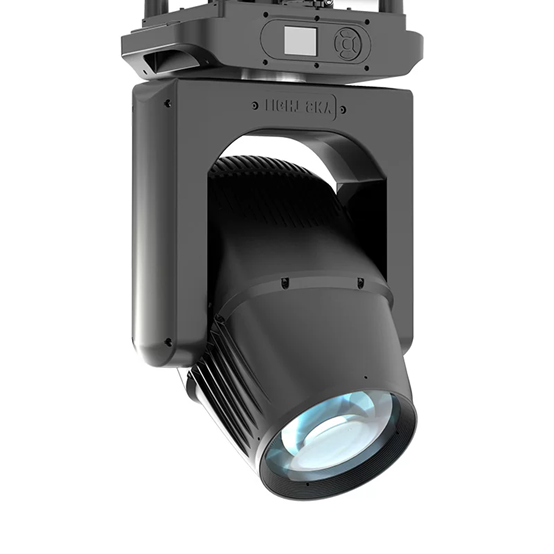
At LiGHT SKY, we developed MINI WHALE as a compact moving beam fixture with an IP66 waterproof design. Its lightweight structure, fast response, and precise positioning are suited to outdoor events that require concentrated moving-beam effects. Rather than serving as general courtyard illumination, its role is better understood as a directional effect fixture that can provide focused visual accents in suitable outdoor conditions.
The compact format can also help when installation space is limited. Even so, designers should evaluate the fixture’s exact mounting position, beam path, visitor sightlines, cable arrangement, and weather exposure before deployment. Those practical details determine whether the equipment fits the specific museum environment.
We believe matching a fixture’s designed function to venue requirements carries greater value than adding extra effects merely because the equipment is capable of producing them.
Protect Visitors And Preserve Visual Focus
We recognize that museum audiences seek more than pure entertainment. Architectural features, artworks, educational exhibits and cultural activities may all vie for attention within one single program. Excessive brightness or misdirected lighting movement can obscure these key elements rather than complementing them.
Sightline checks should therefore take place from several visitor positions. Operators can identify glare, reflections, distracting shadows, or unwanted beam paths before the audience arrives. Photography and video should also be considered, since strong contrast may appear differently through a camera than it does to the naked eye.
Thoughtful lighting gives visitors enough visual information without forcing every element into the foreground.
Conclusion
Museum courtyard programs benefit from lighting that responds to the character of the location rather than imposing a generic entertainment look. Architectural features, visitor routes, weather conditions, program changes, and viewing angles all influence the final arrangement. Careful control can create distinctive moments while leaving sufficient visual space for the museum itself.
At LiGHT SKY, we consider those relationships when developing professional lighting solutions for event environments. Teams evaluating moving heads lighting can begin by defining the program’s visual priorities and the courtyard’s technical limitations before comparing fixture types. With those factors established, a waterproof moving head light can provide focused movement and atmosphere in appropriate outdoor installations without overwhelming the cultural setting.