Simple Show Changes For Rooftop Business Receptions Using A Waterproof Moving Head Light
Rooftop business receptions often have a naturally striking setting, yet the visual character of the venue can change quickly after sunset. City lights, building façades, open skies, and branded installations may all compete for attention. A waterproof moving head light gives event designers another way to shape that environment through controlled color, direction, and movement. At LiGHT SKY, we consider these effects part of a wider event design in which lighting should support presentations, networking, entertainment, and the surrounding architecture without making the technical system unnecessarily complicated.
Read The Rooftop Before Building The Show
Rooftop venues usually have fewer visual boundaries than indoor reception halls. Open edges, terraces, stairways, decorative structures, and skyline views can influence how light is perceived from different positions. Mapping these elements before programming helps designers identify suitable fixture locations and decide which areas should remain relatively dark.
Guest circulation deserves equal consideration. People may move between dining tables, cocktail areas, presentation spaces, and viewing points throughout the evening. Beam paths that look attractive from the control position could become distracting from another part of the venue. Checking the lighting from several guest perspectives provides useful information before the reception begins.
Good visual planning starts with understanding how people experience the rooftop, not simply where equipment can be installed.
Build Different Looks Around The Schedule
Business receptions rarely remain at the same energy level. Opening remarks might require restrained illumination, while product presentations need clear visibility for speakers and displays. Dinner can introduce a softer atmosphere, followed by stronger movement once music or entertainment begins.
Separate lighting cues make these changes easier to manage. Instead of programming one elaborate sequence for the entire evening, operators can create several looks with different brightness, color, movement, and beam positions. Transitions can then happen according to the actual schedule, which is useful if speeches run longer than expected or networking continues beyond the planned time.
We find subtle changes can have considerable visual impact when they coincide with meaningful moments in the program.
Use Color Without Overloading The Venue
Color is especially noticeable on rooftops because surrounding darkness provides strong contrast. Excessively saturated illumination, however, can compete with corporate branding, digital displays, floral arrangements, or architectural lighting. Designers should first identify which colors already exist in the venue before introducing additional ones.
The relationship between color and material matters as well. Glass, polished metal, white furniture, and reflective signage can produce unexpected highlights. Neutral illumination may work better during formal communication, while more expressive color combinations can be reserved for entertainment sections. Such differentiation gives the reception a visual rhythm without requiring constant fixture movement.
Well-planned color changes should clarify the mood rather than make every part of the event equally vivid.
Give Moving Fixtures A Specific Job
The term moving head fixtures covers equipment with different optical characteristics and intended uses. Beam-oriented models can create narrow projections, while wash-oriented equipment provides broader illumination. Movement speed, beam angle, color systems, output, and control functions all affect how a fixture should be incorporated into a rooftop production.
A practical design might reserve concentrated movement for entrances, entertainment, or musical transitions while keeping speakers and networking areas visually calmer. Fixture positions should also account for neighboring buildings and guest sightlines. Direct projections toward occupied seating can cause glare, whereas upward or background-oriented angles may create stronger atmosphere with less visual interference.
The value of movement comes from giving operators another layer of control rather than keeping fixtures in motion throughout the night.
One Compact Beam Solution In Practice
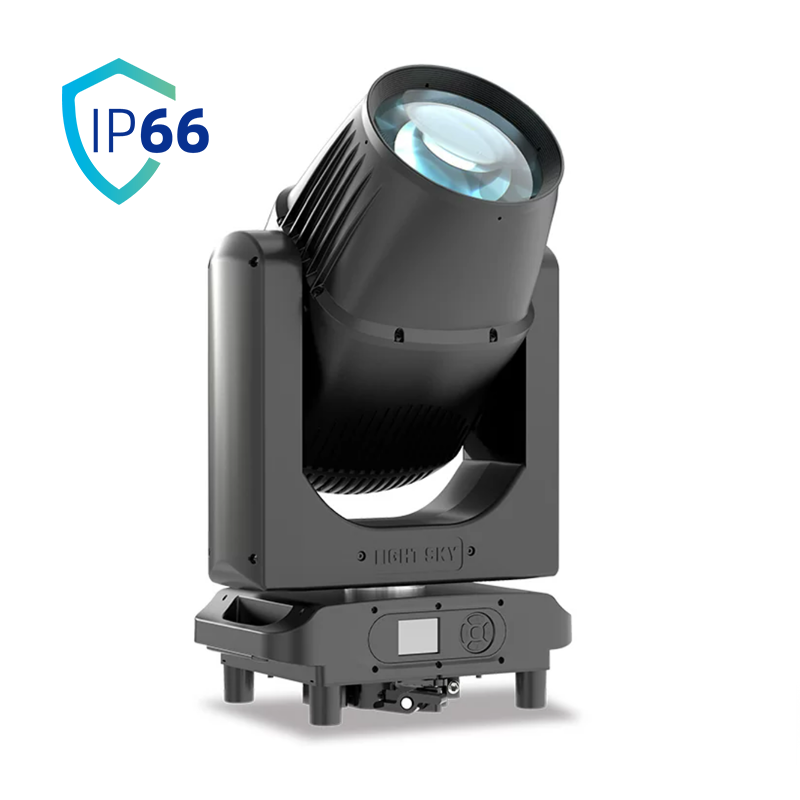
At LiGHT SKY, we developed MINI WHALE as a compact pure-beam fixture with an IP66 waterproof design, lightweight construction, fast response, and precise positioning. Its color system includes 14 colors plus blank, with a bi-directional rainbow effect, dual-color stepping gradient, and bidirectional color-wheel rotation. These functions allow designers to create varied color transitions while maintaining the focused character expected from a moving beam fixture.
The model can suit appropriate outdoor event applications where concentrated effects are required, although its role should remain distinct from broad-area illumination. Careful positioning is still important on a rooftop because beam direction, mounting height, nearby structures, and guest locations can significantly change the perceived result.
We find technical specifications become more meaningful once they are connected to a defined visual task.
Coordinate Lighting With Branding And Cameras
Corporate receptions often contain logos, product displays, LED screens, and photography areas. Lighting should help these elements remain recognizable instead of washing everything in the same intensity. Speakers may need relatively consistent front illumination, while branded backgrounds can receive separate treatment.
Photography adds another consideration. Strong beams behind guests can create silhouettes or excessive contrast, especially when cameras move around the reception. Operators can prepare calmer cues for speeches and photographs, then introduce more dynamic effects during entertainment. Camera checks during rehearsal can reveal problems that are difficult to notice from the audience position.
Coordination between lighting, branding, and media makes the finished event easier to experience and document.
Keep Outdoor Operation Practical
Weather remains an important variable on any rooftop. Moisture, dust, temperature changes, and unexpected rainfall can influence equipment placement and event procedures. An IP rating provides useful information about fixture protection, but cables, connectors, mounting arrangements, and power distribution also need attention.
Technical crews should establish practical procedures before guests arrive. Fixture positions can be checked against drainage routes and walking paths, while control connections should be tested before the show begins. Backup cues are also useful when weather or scheduling forces an unexpected change.
A flexible operating plan gives the creative design room to adapt without creating unnecessary disruption.
Conclusion
We find rooftop receptions already feature a unique visual identity shaped by urban skylines, architectural structures, and open-air atmospheres. With deliberate lighting design, we add a refined visual layer to these events: we distinguish formal presentation segments from entertainment sessions, craft smooth scene transitions, and introduce tailored color tones and dynamic beam movements at precise moments. We believe exceptional lighting outcomes stem from restraint. We avoid applying uniform intensity, beam movement, and color treatment to every event segment.
At LiGHT SKY, we approach moving head fixtures through their practical relationship with venue conditions, programming, and creative objectives. Event teams can assess beam direction, color functions, movement, weather protection, and control requirements before selecting equipment. Used with a clear purpose, a waterproof moving head light can help transform a rooftop reception while keeping the business message and guest experience firmly in focus.