
Planning Community Galas With Professional Stage Lighting In Mind
Community galas bring together music, dance, speeches, awards, and local performances, often within a venue that was not originally designed for complex productions. That combination makes lighting a practical part of event planning rather than an afterthought. A knowledgeable stage lighting manufacturer can help planners think through beam direction, stage coverage, audience sightlines, power requirements, and control needs before the equipment reaches the venue. At LiGHT SKY, we believe a community event can achieve an engaging visual atmosphere without relying on excessive effects or an unnecessarily complicated setup.
Start With The Space And Program
Every community venue presents its own limitations. A civic hall may have a low ceiling and restricted rigging positions, while a theater can offer more dedicated infrastructure. Stage dimensions, performer locations, seating arrangements, ambient light, and available electrical capacity should be mapped before deciding where fixtures belong. These details influence coverage just as much as the equipment itself.
The event schedule deserves the same attention. A dance performance may need stronger directional contrast, whereas a speech calls for comfortable and consistent facial illumination. Group performances can require broader coverage, while award presentations often benefit from a more defined focal area. Building several lighting states around these differences makes the program easier to follow without constantly changing the physical setup.
A clear understanding of the venue and program creates a stronger foundation than selecting fixtures by appearance alone.
Use Beam Effects With Restraint
Directional beams can give a gala a stronger sense of scale, particularly during musical numbers or opening sequences. However, the visual result depends heavily on beam angle, atmospheric conditions, fixture height, and audience position. A narrow beam crossing directly through the audience’s line of sight may feel intrusive, while an appropriately positioned beam can add depth without becoming uncomfortable.
The same principle applies to color. Bright, saturated hues can work well during energetic performances, but neutral or moderately colored illumination may be more appropriate for speeches and community announcements. Alternating between restrained and expressive looks creates contrast, allowing major moments to feel different without making the entire evening visually intense.
Visual impact becomes more meaningful when effects appear selectively and correspond to the character of the program.
Match Beam Characteristics To Indoor Requirements
A stage beam light can create concentrated shafts of light, directional accents, and movement across a performance area. Its practical usefulness depends on optical specifications rather than the product category alone. Beam angle, output, movement range, color functions, control compatibility, and throw distance all influence how a fixture behaves in a particular venue.
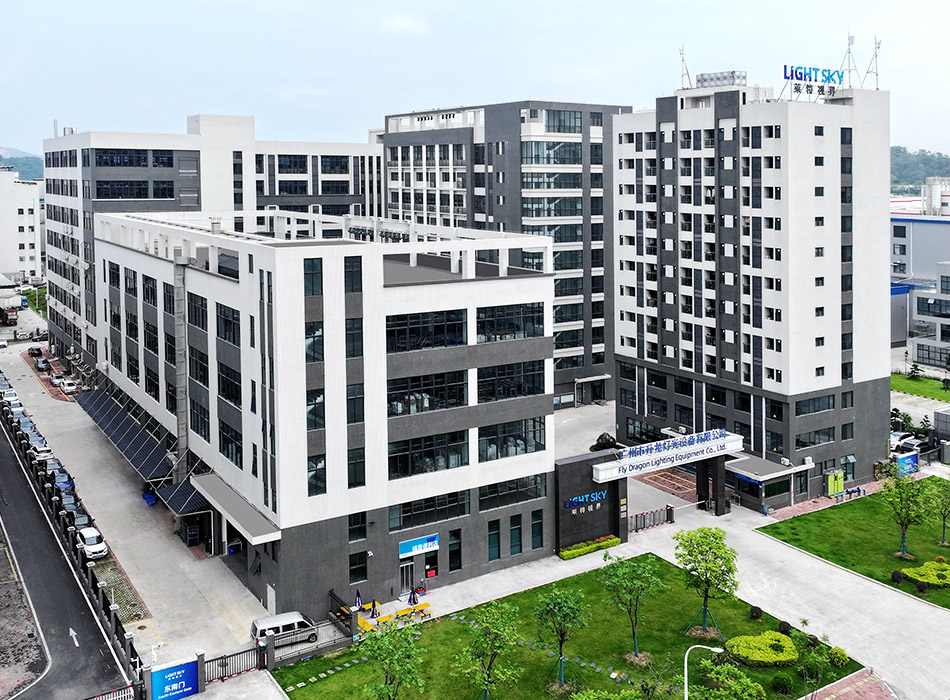
For indoor productions, equipment should also be assessed according to its intended operating environment. At LiGHT SKY, our professional lighting range includes fixtures designed for different stage applications, and we develop equipment with attention to optical performance and control requirements. Our manufacturing and R&D center covers 50,000 m², while our company holds more than 200 patents. These capabilities provide a technical foundation for developing lighting equipment intended for professional production environments.
A useful specification comparison connects each parameter to a real requirement, such as stage size, projection distance, or desired visual effect.
Coordinate Lighting With Screens And Cameras
Community galas increasingly incorporate LED displays, projection, photography, or livestreaming. A brightly illuminated screen can alter how the audience perceives surrounding light, while cameras may respond differently to contrast and color than the human eye. Presenters therefore need sufficient facial illumination without creating competing brightness around the main visual content.
Camera positions should be considered during rehearsal rather than only after the system has been installed. Looking through the actual camera can reveal shadows, excessive highlights, reflections, or color shifts that may not be obvious from the audience. This is especially relevant when performers wear reflective costumes or when trophies and stage decorations have polished surfaces.
A lighting design that accounts for both physical and digital viewing gives the event a more consistent appearance.
Keep Operation Practical On Event Day
Many community productions depend on a relatively small technical crew, volunteers, or operators who may not work with the system regularly. Programming should therefore remain understandable, with clearly organized cues for speeches, performances, transitions, and finale sequences. A technically sophisticated fixture is less useful if its functions cannot be incorporated efficiently into the show’s workflow.
Preparation can also reduce problems during the event. A pre-show check should cover fixture addressing, control signals, power connections, focus positions, beam paths, and cue timing. Operators can then concentrate on the performance instead of making avoidable technical adjustments while the audience is present.
Practical operation matters just as much as visual ambition when resources are limited.
Conclusion
A community gala can gain considerable visual character from a lighting system that respects the venue, program, performers, and audience. The goal is not to fill every moment with movement or color, but to create enough contrast that important sections of the evening feel distinct. Careful planning also makes the production easier to operate, record, and adapt when the schedule changes.
At LiGHT SKY, we approach professional lighting through the relationship between creative intent and technical conditions. Anyone evaluating a stage lighting manufacturer can begin with the venue’s actual dimensions, program structure, control infrastructure, and audience sightlines before comparing equipment. A thoughtfully selected stage beam light can then contribute directional energy where it has genuine visual value, while the rest of the system maintains the clarity and comfort a community event requires.