
Making Outdoor Wedding Receptions More Dynamic With A Waterproof Moving Head Light
Outdoor wedding receptions combine romance with unpredictable surroundings. A garden, terrace, beachside venue, or open-air courtyard can change dramatically as daylight fades, and the lighting needs to transition with the event rather than remain fixed in one visual state. A carefully selected waterproof moving head light can provide directional color, movement, and atmosphere while giving planners more flexibility when weather or venue conditions become part of the production. At LiGHT SKY, we consider lighting a practical part of the wedding environment, where visual effects should complement the ceremony, dining area, music, and photography.
Let The Venue Shape The Lighting Concept
Outdoor spaces rarely have the visual boundaries found inside a theater. Trees, buildings, tents, pathways, seating areas, and architectural features can all become part of the composition. Instead of illuminating everything equally, designers can divide the venue into zones and assign different lighting roles to each one. A ceremony area may require soft coverage, while a dance floor can support stronger movement and color.
The timing of the reception matters just as much. Natural daylight may provide most of the illumination during the early part of the event, reducing the need for intense effects. As the sky becomes darker, directional beams and saturated colors become more visible. Programming several looks around these changes creates a smoother transition from dinner to dancing without requiring constant manual adjustment.
The best outdoor lighting concepts respond to the venue’s existing character instead of trying to replace it.
Plan Around Weather And Equipment Protection
Outdoor production introduces environmental factors that are rarely relevant indoors. Moisture, dust, temperature changes, and accidental water exposure can affect lighting equipment, especially during events that continue for several hours. Fixture protection therefore needs to be considered alongside optical performance and creative functions.
An appropriate ingress protection rating provides useful information, but it should not be treated as the only planning criterion. Cable connections, mounting positions, drainage, power distribution, and the forecast should also be reviewed before installation. Equipment should be positioned so that rainwater does not collect around vulnerable connections, while operators should have a practical response plan if conditions change.
Weather-aware planning gives the lighting team more confidence without allowing environmental concerns to dominate the creative design.
Use Moving Beams To Shape The Evening
Directional lighting can create striking moments during an outdoor reception because beams become increasingly visible as ambient light decreases. A narrow projection can frame an entrance, emphasize a dance floor, or create movement behind a performance. Yet the effect depends on placement: beams directed toward guests can cause discomfort, while angles aimed above or behind the audience may produce atmosphere without interfering with sightlines.
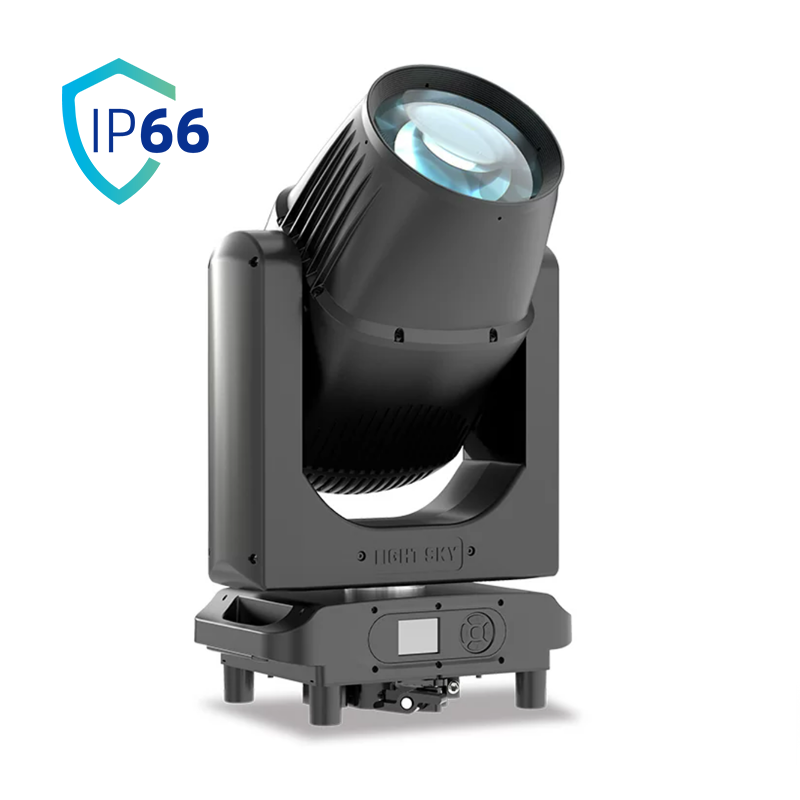
At LiGHT SKY, we developed the MINI WHALE as a compact pure-beam waterproof moving head for dynamic applications including weddings and other events. The fixture features an IP66 rating, fast movement, vivid color performance, sharp gobo projection, and a lightweight body. Its specifications make it particularly relevant to outdoor productions where environmental protection and directional effects need to coexist. The model is designed as a moving beam solution rather than a general-purpose floodlight, so its role should be planned around beam effects and precise positioning.
The practical value of a compact fixture comes from matching its optical purpose and environmental characteristics with the specific demands of the reception.
Keep Wedding Photography In Mind
Lighting that looks dramatic to guests may produce very different results through a camera. Wedding photographers often move throughout the venue, capturing speeches, table interactions, entrances, dancing, and candid moments from changing angles. Strong beams or saturated colors positioned directly behind a subject can create silhouettes or unwanted contrast.
A layered lighting approach can help preserve photographic flexibility. Functional illumination around key people should remain reasonably consistent, while decorative effects can occupy backgrounds and peripheral areas. During formal photographs, operators may also reduce dynamic effects temporarily so that skin tones, clothing, and details remain easier to reproduce.
Good coordination between event lighting and photography allows the visual atmosphere to survive beyond the reception itself.
Make The Control System Easy To Adapt
Wedding schedules can change quickly. A speech may run longer than planned, a couple may arrive early, or the dance floor may become active sooner than expected. Lighting cues should therefore be flexible enough to respond to real-time changes rather than relying entirely on a rigid sequence.
A compact control structure can include separate looks for guest arrival, ceremony, dinner, speeches, first dance, open dancing, and closing moments. Operators can then move between these states without rebuilding the entire show. Manual control remains useful for unexpected moments, while programmed cues handle repeated transitions.
Simple operation becomes especially valuable when the lighting team is working alongside DJs, musicians, photographers, venue staff, and wedding planners.
Conclusion
Outdoor wedding lighting works best when atmosphere and practicality are considered together. Venue characteristics, sunset timing, weather exposure, guest sightlines, photography, and control requirements all influence the final result. Directional effects can add energy to a reception, but restraint is equally important; the lighting should enhance the celebration without competing with the people experiencing it.
At LiGHT SKY, we approach outdoor event lighting through the relationship between fixture capability and real-world conditions. A professional lighting company can help planners translate creative ideas into considerations such as IP protection, beam direction, color control, mounting, and operation. With those fundamentals established, a waterproof moving head light can become a flexible part of the reception design, while our MINI WHALE provides one compact example of how environmental protection and moving-beam effects can be combined for suitable outdoor events.