
Professional Stage Lighting for Brand Launches: A Simple Starting Point
A brand launch has only a short window to establish a visual identity, and the lighting can influence how that identity is perceived across the venue and on camera. A thoughtful lighting plan does more than make a stage brighter; it shapes attention, separates speakers from backgrounds, supports product reveals, and gives photographs a consistent visual character. For planners evaluating a stage lighting manufacturer, the more useful question is therefore not simply how bright a fixture can be, but how well the equipment supports the communication goals of the event.
Build The Lighting Around The Brand Message
A launch event usually contains several visual moments rather than one continuous scene. The opening presentation may need restrained illumination, a product reveal might call for sharper contrast, while a keynote requires comfortable coverage across the speaking area. Treating every moment with the same intensity can flatten these differences. A better approach begins with a simple cue structure: identify the key moments, decide what deserves visual emphasis, and then determine which fixture types can create those changes without making the audience focus on the equipment itself.
Color deserves similar consideration. Brand colors can be incorporated into backgrounds, architectural elements, or selected stage zones, yet excessive saturation may affect skin tones and product photography. Neutral front light combined with controlled color from the sides or rear often gives designers greater flexibility. The lighting plan becomes more effective when the visual identity remains recognizable while the stage still looks natural to the audience and cameras.
We believe a useful starting principle is to let the launch narrative determine our lighting changes, rather than asking the lighting system to create effects simply because they are available.
Understand What Moving Fixtures Actually Add
We find moving fixtures become extremely valuable when a launch venue requires multiple visual looks from a compact lighting rig. Their pan and tilt movement allows us to cover different stage areas with the same equipment, while optical functions including zoom, color mixing, gobos, framing, and beam shaping let us completely reshape the character of each scene. For our procurement team evaluating moving head light manufacturers, these capabilities are critical, because fixture flexibility directly impacts how efficiently a lighting package adapts to different event formats.
We pay special attention to optical performance during fixture selection. We use narrow‑beam outputs to build sharp definition and visual direction, while a broad zoom range enables larger‑area coverage so we do not need to assign every fixture to a single fixed role. Control‑system compatibility is equally critical for us, as fixtures must communicate stably with lighting consoles and the broader system. For event teams, support for specifications including DMX, RDM, Art‑Net, and sACN can therefore carry greater practical relevance than headline lumen figures alone.
The strongest fixture choice is usually the one whose optical range and control options correspond to the venue, staging layout, and planned cues.
Match Fixture Characteristics To The Venue
Venue conditions can change the practical requirements considerably. A ballroom, television studio, theater, and outdoor launch do not expose lighting equipment to the same operating environment. Indoor events may place greater emphasis on quiet operation and precise beam control, while outdoor productions may require fixtures designed for environmental exposure. Power availability, rigging positions, ambient light, viewing distance, and available control infrastructure should all enter the selection process before equipment is ordered.
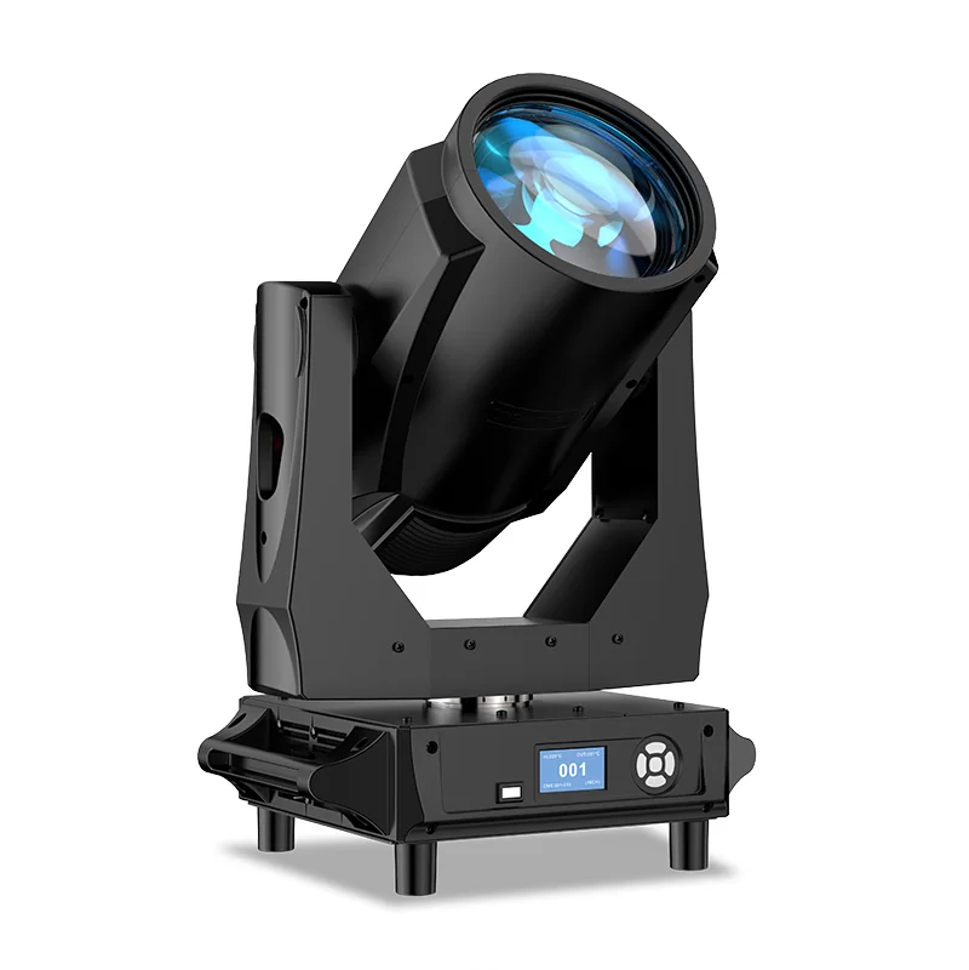
We work with multiple fixture categories from LiGHT SKY, covering moving‑beam, LED‑wash, entertainment, theatre‑grade, and outdoor lighting solutions. One representative unit is the SUPER SCOPE II. Its official datasheet specifies a 520W white LED module, a 3.8°–50° zoom range, a 140 mm high‑transmission coated lens, and a rated total lumen output of 20 000 lm. These figures demonstrate why we rely on official specification sheets rather than generic product descriptions. The zoom range shows us how the fixture shifts between narrow and wide projections, while the light‑source parameters and lumen output deliver hard reference values for our system layout and planning.
Rather than selecting equipment from a catalog alone, event teams can compare these specifications against throw distance, stage dimensions, camera positions, and expected audience sightlines.
Plan For Cameras As Well As The Audience
We find that a launch can look convincing in the room yet appear unbalanced through a camera. Bright backgrounds, highly saturated colors, or poorly controlled contrast may produce a very different result on video. For this reason, we need front‑lighting to offer enough consistency for presenters and products, while decorative effects can remain more directional. We consider camera tests before the event especially useful, because they reveal problems that may not be obvious to someone standing in the audience.
Color temperature and color rendering are also relevant when products, presenters, or brand materials need accurate visual reproduction. A lighting system should be assessed according to the intended camera workflow rather than treated as a purely theatrical component. This becomes increasingly important when a launch is simultaneously serving an in-person audience, livestream viewers, social media teams, and press photographers.
A camera-aware lighting plan gives the launch a more consistent visual language across physical and digital channels.
Evaluate Suppliers Beyond Individual Fixtures
Equipment specifications provide only part of the procurement picture. A project team may also need technical documentation, application guidance, spare-parts support, software information, and communication with a supplier before and after deployment. These factors can become particularly important when a launch is part of a touring campaign or when the same visual concept will be recreated in several venues.
We believe teams evaluating different moving‑head‑light manufacturers should weigh supplier capabilities together with beam performance and control‑protocol specifications. At LiGHT SKY, we integrate R&D, production, global distribution, OEM and ODM services. Our facility spans 50 000 m², which includes 15 000 m² dedicated to R&D and standardized workshops. We hold more than 200 national patents and employ over 300 staff members. These facts give buyers valuable background for evaluating overall manufacturing capacity, instead of judging a lighting fixture in complete isolation.
A practical supplier review can include product documentation, technical responsiveness, application experience, service arrangements, and the ability to adapt equipment choices to a project’s actual requirements.
Create A Lighting Plan That Can Evolve
Brand launches rarely follow a completely rigid visual sequence. A presentation may run longer than expected, a product reveal may change during rehearsal, or a keynote speaker may move beyond the planned area. Flexible programming helps the lighting team respond without rebuilding the entire design. Preset looks, adjustable movement, and appropriate fixture coverage can make these changes easier to manage.
A sensible design also avoids filling every cue with movement. Static looks can provide visual stability between major moments, while movement and color shifts can be reserved for transitions, reveals, or other meaningful points in the program. That restraint often makes the important changes more noticeable because the audience has a visual baseline against which to perceive them.
At LiGHT SKY, we approach professional lighting as part of the wider event system, where fixture capability, venue conditions, control, camera requirements, and creative intent need to work together. For teams researching a stage lighting manufacturer, the most useful next step is to translate the launch concept into measurable requirements before comparing equipment. A clear brief can then guide discussions with moving head light manufacturers, making it easier to assess optical specifications, control compatibility, operating conditions, and application suitability without letting product features dictate the event narrative.