
Making Car Shows Easier to Plan with MINI WHALE and Vehicle Reveal Lighting
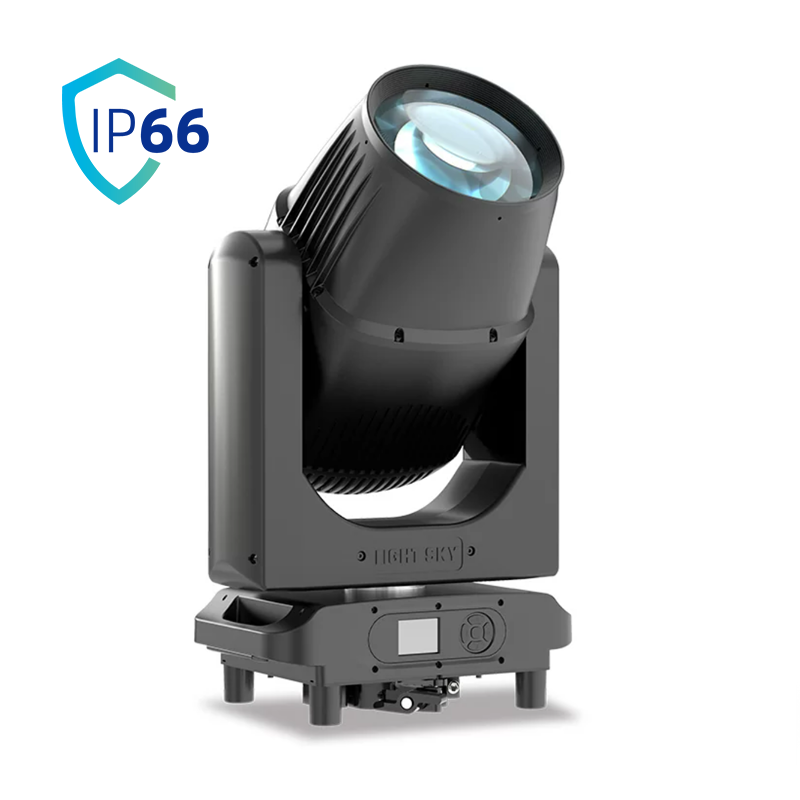
Vehicle reveals require more than simply making a new model visible. We need to coordinate fixture positions, beam directions, color, movement, and environmental conditions so that lighting supports the reveal sequence without interfering with the vehicle itself. For event teams, a clear lighting plan helps simplify installation and gives operators more predictable control during rehearsals and the live presentation. At LiGHT SKY, we developed MINI WHALE as a compact pure-beam fixture for applications including car shows, with an IP66-rated design and moving-beam functions suited to dynamic event environments.
Start with the Vehicle, Not the Fixture
The vehicle should remain the visual reference point when we build a lighting plan. Its body shape, paint finish, glass surfaces, wheels, and exterior details all respond differently to light, so fixture placement should be considered according to the areas that need emphasis.
A narrow beam can help establish a defined visual direction, while movement can introduce changes between different stages of a presentation. Rather than filling every area with light, we can assign specific fixtures to reveal, separation, background, or architectural functions.
This approach also makes programming easier. When every fixture has a clear purpose, operators can organize cues according to the reveal sequence instead of relying on large numbers of overlapping effects.
Plan Beam Angles Around the Reveal Space
Beam geometry becomes particularly important when the audience needs to see both the vehicle and the surrounding presentation area. A very narrow beam can create a concentrated visual line, but its position must be planned carefully to avoid distracting from important vehicle details.
For projects using a waterproof moving head light, we should also consider mounting positions and the direction in which the beam travels. Outdoor car shows may involve open areas, temporary structures, or partially exposed stages, so fixture placement needs to account for the actual event environment.
The MINI WHALE specification lists a 1.3° beam angle, with additional narrow beam options, allowing designers to consider different projection requirements when developing a cue structure.
Use Movement with a Clear Purpose
Moving fixtures can change the visual structure of a car-show presentation, but movement should follow the timing and spatial logic of the event. Slow positioning can establish anticipation, while a faster transition may accompany a programmed reveal or change of scene.
We generally find it more practical to divide movement into defined cue groups rather than continuously changing every fixture. This reduces unnecessary programming complexity and helps the lighting team reproduce the intended sequence during rehearsals.
Pan and tilt ranges should also be considered during planning. MINI WHALE provides 540° pan and 270° tilt movement, with 8-bit and 16-bit precision options specified on its product page.
Consider Color, Gobo, and Prism Functions Separately
Color should support the presentation rather than compete with the vehicle’s own visual identity. Designers can establish a base color environment and then introduce changes at specific moments, depending on the show’s creative direction.
Gobos can provide additional texture for backgrounds or surrounding spaces, while prisms can alter the character of a beam when a more layered effect is required. Keeping these functions separate during programming makes it easier to determine which effect belongs to each part of the show.
For a LiGHT SKY moving head, MINI WHALE includes a 14-color wheel plus blank, 17 fixed gobos plus blank, and both 8-facet and 24-facet prism effects. These functions provide several programming options without requiring every cue to use every effect.
Account for Indoor and Outdoor Conditions
Car shows can take place inside exhibition halls, covered venues, or outdoor event spaces. Lighting plans therefore need to consider environmental exposure, power access, mounting conditions, and the physical relationship between fixtures and vehicles.
An IP rating is one useful specification to review when equipment may encounter outdoor conditions. However, it should be treated as one part of the overall planning process rather than as a substitute for appropriate installation and event-site assessment.
MINI WHALE is specified with an IP66 rating and an operating environment of -10°C to 40°C, giving planners concrete equipment information to consider when evaluating suitable applications.
Build the Reveal Around Repeatable Cues
A vehicle reveal often involves several coordinated stages: preparation, blackout or reduction, initial illumination, reveal movement, and the final presentation. Each stage can be programmed as an identifiable cue rather than treated as one continuous lighting sequence.
This structure gives production teams a clearer way to rehearse and adjust the show. If the vehicle position changes or the stage layout is modified, individual cue groups can be reviewed without rebuilding the entire lighting program.
Control compatibility is another practical consideration. MINI WHALE supports DMX512 and RDM, with ArtNet listed as an optional protocol, allowing the control system to be considered alongside the wider event infrastructure.
A More Practical Way to Approach Vehicle Reveals
Our MINI WHALE combines a compact moving-beam format with an IP66 design, narrow beam output, color, gobo, prism, focus, and programmable movement. For car shows, we can use these functions as individual planning tools rather than treating the fixture as a single-effect device.
At LiGHT SKY, we see vehicle reveal lighting as a coordination task: the fixture, venue, control system, vehicle position, and show timing all need to work together. By defining each lighting function before programming begins, teams can create a more organized production workflow while using MINI WHALE as a practical option for dynamic car-show environments.