How AURORA AQUA Can Help with Multi-function Stage Looks in TV Studios
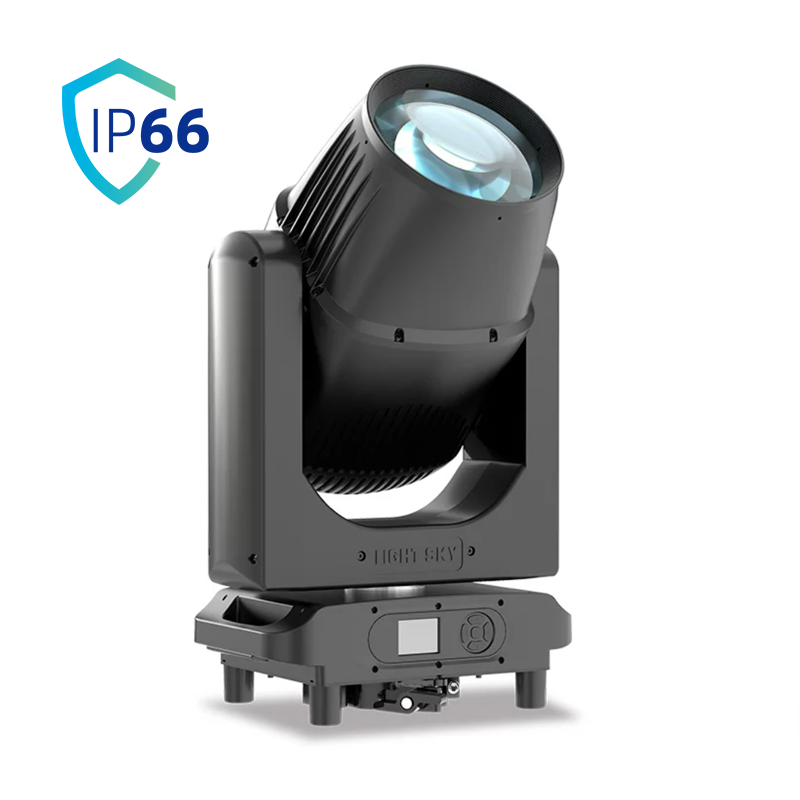
Television studios often need lighting that can support several visual formats without making fixture planning unnecessarily complicated. Talk shows, music performances, interviews, and recorded productions may require different combinations of beam, wash, and spot effects. We see this as an area where flexible fixture functions and controlled optical performance can simplify stage-lighting decisions. LiGHT SKY presents AURORA AQUA as a 3-in-1 moving head fixture designed for theaters, concerts, TV studios, stadiums, and outdoor events, combining beam, wash, and spot functions in one unit.
Three Lighting Functions Within One Fixture
A multi-function fixture combines several basic lighting approaches rather than limiting the fixture to one visual task. Beam lighting is generally used for concentrated projections, wash lighting provides broader coverage, while spot lighting is suited to more defined projection and shaping.
A 3in1 BSW moving head beam light applies these functions through different zoom ranges. AURORA AQUA specifies 1.8°–24° for beam mode, 4°–45° for spot mode, and 2.6°–43° for wash mode. This range allows lighting teams to adjust the optical character according to the scene rather than changing the fixture itself.
For television work, this flexibility can be useful when one studio space serves several production formats. Instead of treating every scene as a completely separate lighting system, operators can use different fixture functions and angles as part of the same overall design.
Managing Color and Visual Definition
Studio lighting needs more than brightness. Color, projection definition, and the relationship between fixtures can all affect how a stage appears on camera. A lighting system therefore needs enough control to create differences between scenes without relying only on fixture quantity.
AURORA AQUA incorporates linear CMY color mixing, linear CTO from 2800K to 7000K, and a color system with multiple filters. Its specifications also include fixed and rotating gobo wheels, a dynamic effect wheel, prisms, frost filters, electronic focus, and adjustable dimming. These functions provide several ways to modify the appearance of a fixture while maintaining the same physical installation.
This matters when a studio transitions between different program segments. A focused projection can establish a defined visual element, while a wider wash approach can help support a broader stage area. The same fixture can therefore participate in different lighting arrangements without requiring an entirely different optical unit.
Considering Control During Studio Programming
Flexible hardware still needs an appropriate control structure. In a television studio, lighting teams may need to recall different looks or coordinate multiple fixtures as production requirements change. Consistent control options can make this programming process easier to organize.
AURORA AQUA supports DMX512, RDM, Art-Net, and sACN, with selectable control-channel configurations. It also provides 8-bit and 16-bit pan and tilt precision, with 540° pan and 270° tilt movement. These specifications give operators multiple options for integrating movement and lighting parameters into a programmed system.
For teams comparing a leading stage lighting supplier, it is useful to examine control compatibility alongside optical functions. Fixture flexibility is more practical when it can fit the existing control infrastructure rather than requiring an isolated operating approach.
Studio Planning Beyond the Camera Frame
Television studios can also involve demanding physical environments, especially where fixtures are installed in locations exposed to changing conditions or where the same equipment may be used for indoor and outdoor productions. Fixture construction and thermal management consequently deserve attention during equipment planning.
The AURORA AQUA is specified with an IP66 rating and an operating environment of -20°C to 45°C. Its Dynamic Temperature Control System is designed as part of the fixture’s cooling approach. The product page also specifies an 8,000-hour theoretical light-source lifespan.
These specifications do not replace the need for proper installation and maintenance, but they provide concrete parameters for production teams evaluating where a fixture can be incorporated. For studios handling varied production environments, such information can be considered alongside optical and control requirements.
Bringing the Functions into One Lighting Approach
For multi-format studio production, the main consideration is not simply how many effects a fixture contains. The more useful question is how its functions, optical ranges, color control, movement, and control protocols fit together within an actual lighting workflow.
At LiGHT SKY, we position AURORA AQUA around this multi-function approach. Its beam, wash, and spot capabilities, combined with optical control, color systems, effects, movement, and IP66 construction, provide a single fixture platform for different stage-lighting requirements. As a 3-in-1 fixture, it can be considered when TV studios need adaptable stage looks while keeping fixture planning structured and technically defined. This approach also gives production teams more room to adjust visual arrangements for different programs, camera compositions, and stage configurations without changing the basic fixture platform. By bringing several lighting functions together, AURORA AQUA offers a practical option for studios seeking greater versatility within a coordinated lighting system.