Getting More Variety in TV Studios with SUPER SCOPE PLUS and Multi-function Studio Lighting
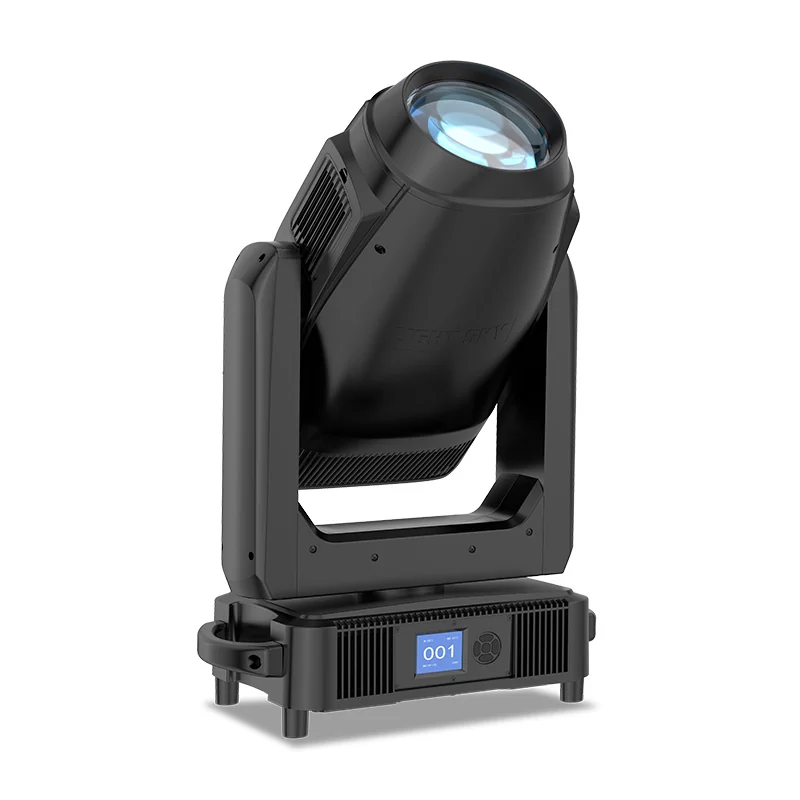
Television studios often need to support different visual formats within the same production space. Interviews, entertainment programs, music performances, presentations, and recorded events can each require different lighting relationships between performers, scenery, and cameras. We therefore need to consider not only brightness, but also beam shaping, color control, projection, movement, and the ability to change a lighting look without rebuilding the entire system. LiGHT SKY’s SUPER SCOPE PLUS approaches this requirement as an LED BSWP 4in1 moving head spotlight, combining beam, spot, wash, and profile functions in one fixture. Its 880W white LED module, 180 mm optical lens, 5.5°–52° zoom, framing system, gobo functions, and multiple control options provide a technical foundation for varied studio applications.
Why Variety Matters in a Television Studio
A studio lighting system is rarely designed around only one type of program. A space may need controlled illumination for a presenter in one production and more directional effects for another. The lighting arrangement must therefore allow operators to adjust the visual structure without treating every new production as a completely different installation.
This is where multifunction fixtures become useful. Rather than assigning every lighting task to a separate fixture type, one unit can provide several optical functions. The practical value comes from how these functions are integrated into the overall lighting plan, not simply from the number of effects available.
For studios, flexibility should also be considered alongside control. A fixture that supports established control protocols can be incorporated into existing lighting workflows more easily. This allows operators to manage position, intensity, color, and effects as part of a programmed production rather than relying only on manual adjustment.
Matching Optical Modes to Specific Production Requirements
Beam, spot, wash, and profile functions serve different purposes. Beam lighting generally emphasizes directional projection, while spot lighting is commonly used for defined areas or objects. Wash lighting provides broader coverage, whereas profile lighting allows more deliberate shaping of the illuminated area.
A multifunction fixture can therefore support several visual tasks within one production. For example, a narrower optical setting may help create a defined projection, while a wider setting can distribute light across a larger area. The appropriate choice depends on the studio layout, camera position, scenery, and desired visual treatment.
The key is not to treat every function as equally necessary for every scene. At LiGHT SKY, we should instead match each optical mode to a specific production requirement. This approach makes multifunction lighting more useful as part of a structured design rather than as a collection of effects.
Using Shaping Tools for More Controlled Looks
Light shaping becomes particularly important when the studio contains scenery, presenters, screens, or architectural elements that must remain visually distinct. Uncontrolled spill can affect the appearance of surrounding areas and make a carefully planned composition less precise.
A profile fixture addresses this issue through tools such as framing shutters and gobos. A framing system can restrict the illuminated area, while gobos introduce defined patterns into the projection. These functions allow lighting designers to treat light as a compositional element rather than simply as general illumination.
The same principle applies when creating background separation. Instead of increasing output across an entire area, operators can shape selected sections and establish different visual layers. This can help maintain clearer relationships between foreground subjects and studio scenery.
Color and Diffusion as Production Variables
Color control provides another way to create different studio appearances without physically changing the lighting position. Different color temperatures can alter the relationship between fixtures, scenery, and camera imagery, while color mixing can introduce additional variations when the production calls for them.
Diffusion works differently. Its purpose is to soften or spread the projected light. A controlled diffusion system can therefore provide another adjustment between a defined beam and a broader visual treatment.
When these controls are combined, we can approach different scenes through incremental changes instead of rebuilding the lighting arrangement. This is particularly relevant for studios that record multiple program formats in the same environment.
Planning Movement Without Making It Complicated
Moving-head fixtures add another variable because the direction of light can be changed through pan and tilt. However, movement should serve a production purpose. Random movement may add visual activity, but controlled positioning is more useful when the fixture needs to respond to different stage areas, presenters, scenery, or programmed cues.
Programming also benefits from standardized control systems. DMX512, RDM, Art-Net, and sACN are listed for SUPER SCOPE PLUS, providing several options for integration with compatible control environments.
For a studio team, the objective should be repeatability. Once a useful position, color, intensity, or effect combination has been established, it can become part of a lighting cue and recalled when the same production format returns.
Organizing Studio Lighting Around Practical Needs
When planning a flexible studio lighting system, we do not need to make every fixture responsible for multiple tasks. A more practical starting point is to identify the lighting functions most frequently required and determine how each fixture can contribute to those needs.
Space and rigging availability can also influence equipment choices. Multifunctional fixtures may help reduce the number of dedicated positions required, but factors such as power consumption, fixture size, control infrastructure, operating conditions, and production requirements still need to be considered together.
A fixture that provides both wide-area coverage and more focused projection, for instance, can serve different roles at different stages of a production. Specialized fixtures may still be necessary for specific applications, while multifunctional equipment can provide additional flexibility within the overall system.
Applying SUPER SCOPE PLUS to Studio Production
At LiGHT SKY, we position SUPER SCOPE PLUS as a multifunction solution for professional environments including TV studios. The fixture combines beam, spot, wash, and profile functions, with a 180 mm precision optical lens, 5.5°–52° zoom range, two rotating gobo wheels, a four-blade framing system, prism effects, frost systems, electronic dimming, and multiple control protocols.
For production teams considering an LED moving head light for varied studio looks, these functions provide several ways to modify projection, coverage, framing, color, and movement within one fixture. The practical application should still be determined by the studio layout and production requirements, but the combination gives designers more options when developing repeatable lighting cues.
A multifunction approach ultimately works best when every available feature has a defined role. By connecting optical functions with camera requirements, scenery, control systems, and production workflows, we can create a studio lighting plan that supports different program styles without relying on unnecessary complexity.