DJ Moving Head Lights vs Club Moving Heads: What’s the Real Difference?
In modern stage and entertainment lighting, selecting the right moving head fixtures is essential for achieving consistent visual performance across different venues. At LiGHT SKY, we often encounter questions about the practical differences between DJ MOVING HEAD LIGHTS designed for mobile performances and fixed club installations. While both categories may share similar optical principles, their engineering priorities differ significantly, especially when considering environmental resistance, output stability, and deployment flexibility. In some cases, a waterproof moving head light becomes a critical requirement for outdoor or semi-outdoor applications where reliability cannot be compromised.
Application Environment and Deployment Scenarios
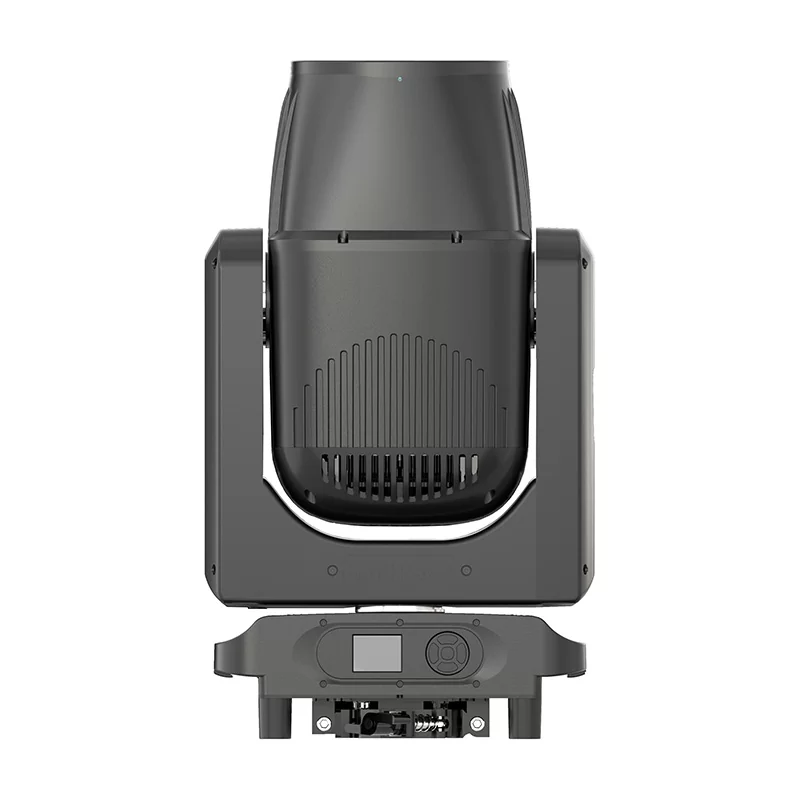
The most fundamental difference lies in usage scenarios. DJ moving head lights are typically optimized for portability, quick setup, and frequent transportation. They are widely used in touring events, weddings, and mobile shows where adaptability is key. In contrast, club systems are installed in fixed locations, prioritizing long-term stability and synchronized lighting design. However, when venues extend to rooftops, beach clubs, or open-air stages, a waterproof moving head light such as LiGHT SKY’s MINI WHALE becomes increasingly relevant. With an IP66 rating, it supports demanding environments while maintaining consistent output performance.
Optical Performance and Beam Control
From an optical standpoint, both categories of moving head fixtures may utilize high-quality light sources, but their design goals differ. LiGHT SKY integrates the OSRAM NED40 source in the MINI WHALE, delivering up to 720,000 lux at 10 meters, with precise beam angles ranging from 0.5° to 1.3°. This level of beam control is essential for both DJ MOVING HEAD LIGHTS and fixed club installations, but mobile applications often prioritize fast repositioning and dynamic effects, whereas club setups focus on layered visual consistency across the entire venue.
Structural Design and Protection Standards
Structural engineering is another key distinction. A professional waterproof moving head light must balance compact size, durability, and thermal management. The MINI WHALE from LiGHT SKY measures 344×238×601mm and weighs 22.1kg, making it suitable for both touring rigs and permanent installations. With an IP66 protection level, it ensures stable operation in environments ranging from -10℃ to 40℃, while maintaining a maximum surface temperature of ≤80℃. Compared to standard moving head fixtures, this level of protection significantly expands deployment possibilities.
Application-Oriented Selection for Modern Moving Head Fixtures
In practice, the choice between DJ MOVING HEAD LIGHTS and club-oriented systems depends on operational needs rather than performance alone. Touring professionals may prioritize lightweight flexibility, while venue operators focus on long-term integration. However, products like LiGHT SKY’s MINI WHALE demonstrate how a high-performance waterproof moving head light can bridge both demands. By combining robust construction, advanced optics, and reliable environmental resistance, modern moving head fixtures are evolving toward a more unified standard that supports both mobility and permanence without compromise.