
Building A More Polished Look For Music Intro Sequences With White Laser Light
Music intros establish the visual language of a performance before the main action begins. Carefully controlled beams, color shifts, and timed movement can turn several opening seconds into a recognizable visual statement without overwhelming the audience. White laser light is particularly useful when a production needs narrow projection, strong distance visibility, and a clean transition from darkness into the first musical cue. At LiGHT SKY, we approach these sequences by considering the relationship between sound, space, visual rhythm, and audience perspective rather than treating lighting as decoration alone.
Establishing Visual Rhythm Before The First Beat
An intro does not need constant movement to feel dynamic. A restrained opening can create anticipation, followed by a gradual increase in intensity as the music develops. Such pacing gives every lighting change a purpose and prevents the stage from appearing visually busy before the performance has properly begun.
Timing should also reflect musical structure. Sustained notes may suit slower beam movements, whereas sharper musical accents can support brief changes in position, color, or intensity. The lighting desk therefore becomes part of the musical arrangement, with cues placed according to rhythm rather than simply following a preset sequence.
Creating Depth Across Large Spaces
Venue dimensions strongly influence how beams are perceived. Long projection distances can make narrow shafts appear visually distinct, while nearby surfaces may reveal patterns that are less noticeable from the audience. Designers should study sightlines from multiple seating areas before deciding where fixtures belong.
Layering is another useful technique. A concentrated central beam can establish the main visual axis, while softer illumination defines surrounding architecture. This separation gives the audience different levels of visual information and prevents every lighting element from competing for attention.
The concept of outdoor sky laser light can also be considered for outdoor music environments, provided the fixture, installation, operation, and local regulations are appropriate for such use. Beam direction and audience safety require particular attention because outdoor projection can extend far beyond the immediate performance area.
Using Color Without Losing Visual Clarity
Color changes can make an intro feel progressive, but excessive variation may weaken the connection between lighting and music. A limited palette often provides greater consistency, especially when the performers, video content, and stage scenery already contain strong colors.
A carefully timed transition can be more effective than rapid cycling. For example, a neutral opening may shift gradually toward the production’s signature color immediately before the main musical phrase. The audience experiences a change without necessarily noticing the technical mechanism behind it.
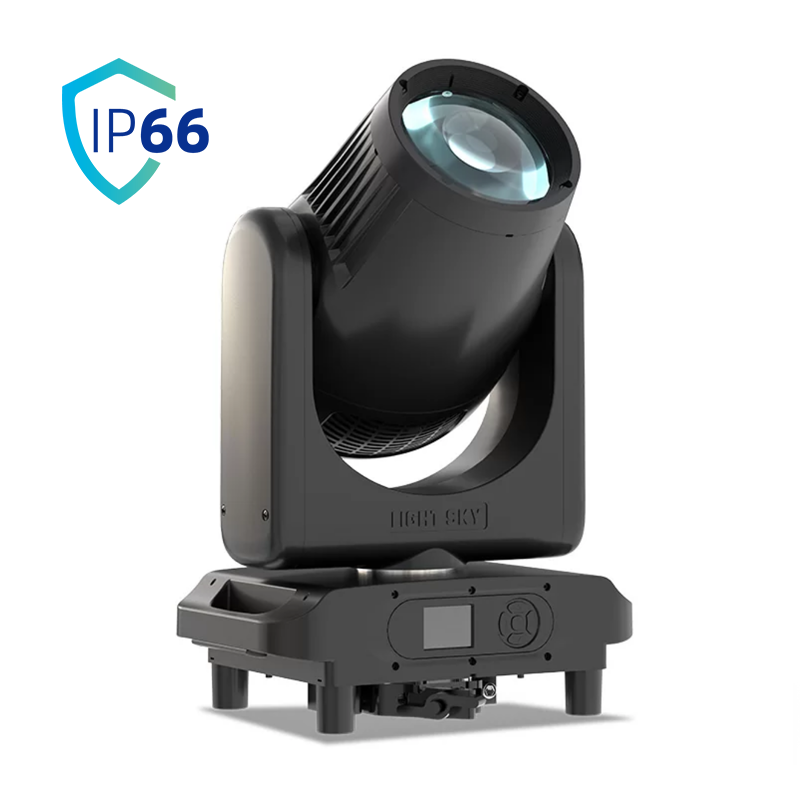
MINI LASER AQUA provides one practical example of this approach. Its 12-color wheel supports bi-directional rainbow effects, while 17 static gobo patterns and blank provide additional projection choices. Dual 8-facet and 24-facet prisms can also create layered beam appearances. Designed for outdoor stage and entertainment applications, the fixture should be used according to its specified operating environment and applicable safety requirements.
Connecting Movement With Musical Structure
Movement becomes more meaningful when it corresponds to something the audience can hear or see. Slow sweeps can accompany an extended musical introduction, while a short repositioning cue may emphasize a transition into the main section. Random movement, by contrast, can make the visual sequence feel less intentional if it lacks a clear relationship with the music.
Fixture placement should support this logic. Units positioned from different angles can create crossing beams, while centrally aligned fixtures may produce a more symmetrical composition. Neither approach is universally preferable; the choice depends on stage geometry, camera framing, and the desired visual character.
An outdoor sky laser light concept can become especially striking in open environments because distance and darkness create greater visual separation. Even so, beam paths must be planned carefully, particularly around spectators, aircraft considerations, nearby structures, and local operating requirements.
Coordinating Lighting With Screens And Cameras
Music events increasingly combine lighting with LED screens, projection, cameras, and scenic elements. Each medium has its own brightness and contrast characteristics, so an effect that looks balanced in person may appear excessive on camera.
Camera tests should therefore form part of rehearsal. White beams can interact strongly with haze, reflective surfaces, and video brightness, while saturated colors may appear differently depending on camera exposure and white balance. Adjusting intensity rather than simply changing fixture positions often provides a more controlled result.
For productions using white laser light, visual restraint becomes particularly valuable during the opening seconds. Concentrated projection can establish direction, while carefully timed color or intensity changes provide enough variation to support the music without distracting from the performers.
Conclusion
Strong music intros rarely depend on filling every second with effects. Clear timing, purposeful movement, restrained color choices, and thoughtful spatial composition can create a stronger visual progression from the first cue to the main performance. Outdoor sky laser light offers another creative possibility for suitable open-air productions, provided technical planning and local requirements remain part of the design process.
At LiGHT SKY, we treat lighting cues as part of the broader performance language, connecting fixture behavior with music, stage geometry, camera needs, and audience perception. We believe a refined opening sequence ultimately comes from identifying which visual changes truly matter, and we let subtle, quiet moments amplify the impact of these key visual transitions.