Strobe Light for Tour? Uses & How to Choose
Key Takeaways:
- Touring stage strobes require heavy-duty DMX control for continuous high-frequency pulsing, unlike watt-second photography flashes.
- Modern LED strobes have been a great alternative to Xenon tubes, offering lower power consumption, thermal efficiency, and digital RGBW color mixing.
- For audience safety, lighting designers should avoid excessive flashing rates (in the UK, the general controls say that the flash rate should be kept at or below 4 flashes per second)[1] threshold to mitigate photosensitive risks.
- Touring rigs benefit from hybrid strobe-blinders to reduce truck weight, cable runs, and rigging time.
Choosing a strobe light for a concert tour requires specifying DMX-controlled, continuous-duty fixtures, not photography flashes. For modern touring, solid-state LED strobes are the standard, replacing legacy Xenon tubes by offering lower power draws, RGBW color mixing, and cooler operation.
Specifying the right strobe involves calculating venue power limits, selecting versatile hybrid form factors to save truck space, and ensuring rapid, secure rigging mechanisms. This guide breaks down the technical parameters stage lighting buyers and production managers must evaluate when equipping a touring rig.
Photo Strobes vs. Stage Strobes
“Strobe” spans two different industries with completely different hardware requirements.
Photographers use battery-powered flash heads measured in watt-seconds for static portraits, while stage designers require DMX-controlled fixtures built for continuous, high-frequency pulsing over multi-hour live sets.
Stage strobes require robust data inputs (DMX512, Art-Net, or sACN) to integrate with the main lighting console. They must also feature heavy-duty thermal management systems, as concert programming demands rapid, repetitive flashing that would overheat and destroy a standard photographic flash unit within minutes.
Classic Xenon vs. Modern LED
LED strobes have become the standard on touring riders, replacing legacy Xenon gas tubes. While Xenon provides a raw, monochromatic white punch, LED arrays deliver superior thermal efficiency, lower power consumption, and full RGBW digital color mixing.
For decades, the Xenon gas discharge tube was the only way to achieve a high-intensity strobe effect. However, these units presented massive logistical challenges for touring crews. The transition to solid-state LED technology resolved these core issues:
| Specification | Xenon Strobes (Legacy) | LED Strobes (Modern Standard) |
|---|---|---|
| Power Consumption | High (500W to 1,500W+) | Low to Medium (50W to 150W typical) |
| Color Output | Monochromatic white (requires physical gels) | Full RGB/RGBW digital color mixing |
| Heat & Lifespan | High thermal output; 1,000–5,000 hours | Cool operation; 50,000+ hours |
| Control | Basic flash speed and trigger | Highly programmable, smooth dimming, pixel mapping |
Strobe Light Uses on Stage
Strobe lights are used to synchronize with musical tempos, create stop-motion optical illusions, and drive audience focus during high-energy performance nodes. Concert production crews rely on strobes to execute specific programming techniques that structure the dynamic flow of a show:
- Tempo Synchronization (BPM): Linking the flash rate directly to drum hits or bass drops allows the audience to visually track the cadence of the music. Mid-range frequencies match high-tempo genres, while slower rates (1–5 Hz) build anticipation.
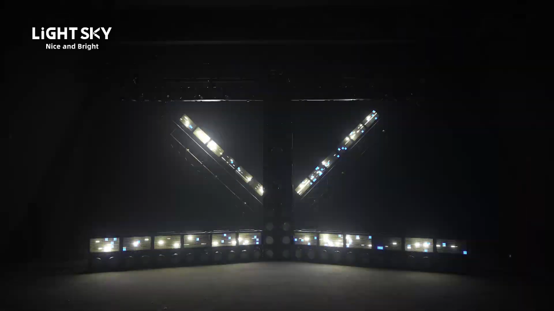
- The “Stop-Motion” Illusion: Flashing high-frequency strobes in a dark room slices continuous motion into a series of static frames, creating a jerky, slow-motion effect that highlights band choreography.
- Focal Shifts: Ramping up strobe intensity rapidly during a stage transition or guitar solo instantly focuses the scattered attention of a large crowd onto a specific stage zone.
How to Choose Strobe Lights for Events & Rigging Logistics
Short answer first: Factors, IP ratings for outdoor stages, and rigging efficiency.
Selecting hybrid fixtures and utilizing advanced locking hardware reduces total fixture counts and minimizes load-in times for crews. To keep truck weight low and maintain versatility, manufacturers offer specialized form factors like linear pixel bars for dynamic chases, and hybrid strobe-blinders that serve dual functions on the truss.
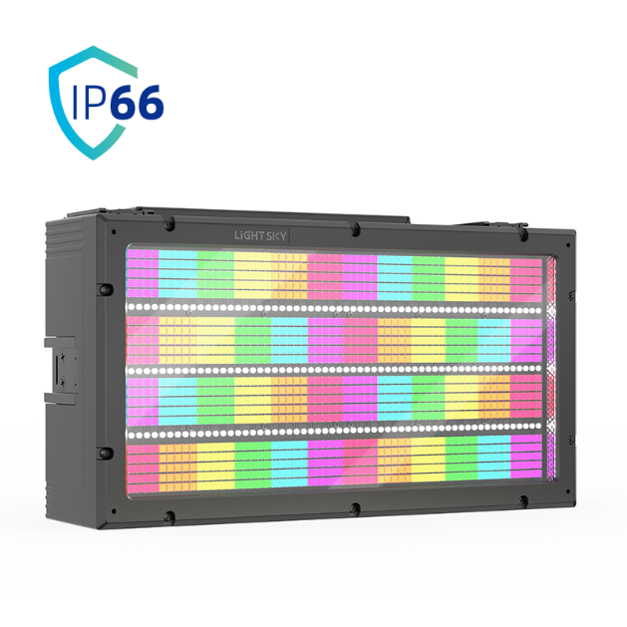
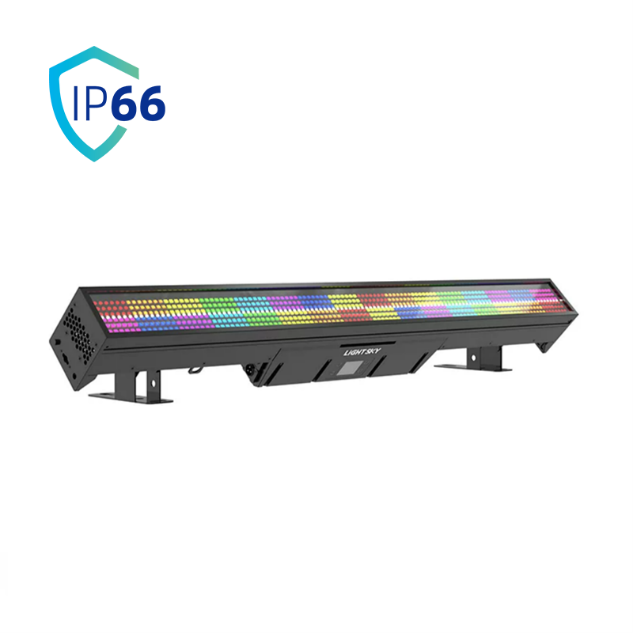
When specifying these fixtures for large matrices or linear arrays, rigging speed is a primary logistical constraint. LiGHT SKY addresses this with the iM-Lock™ Mortise Locking System, available on SEAGUL strobe light. By utilizing an interlocking structural design, fixtures can be securely connected without complex fastening methods. This structural approach reduces the physical hardware required and accelerates the time it takes for touring crews to align and hang multi-fixture arrays.
Safe Placement & Programming Standards
Extreme visual intensity requires strict safety protocols. Designers must avoid excessive flashing rates and utilize short bursts to prevent visual fatigue and mitigate photosensitive health risks.
More importantly, rhythmic, high-intensity flashing can trigger photosensitive seizures or visual fatigue, tour production crews must strictly enforce standard safety and positioning rules:
- The 3-30 Hz Threshold: 5 to 30 flashes per second (Hertz) are most likely to trigger seizures[2].
- Mitigation Protocols: Venues must post highly visible strobe warning signs at all entrances. Programmers should use strobes as strategic accents rather than continuous effects to prevent audience fatigue.
- Truss Geometry: To avoid direct eye strain, mount strobes slightly above audience eye level and angle them downward. In wide arenas, placing units in opposite corners and aiming them inward creates a room-filling cross-fire effect without directly blinding the front rows.
Partner with LiGHT SKY for Your Next Events
LiGHT SKY manufactures heavy-duty, DMX-controlled stage lighting engineered for large-scale live events and touring productions. Contact LiGHT SKY today to request technical specifications, photometric data, and rigging hardware details for your next arena tour or festival deployment.
Reference
- BBC – Strobe Lighting
- EPILEPSY FOUNDATION — Photosensitivity and Seizures