
Why AURORA AQUA Can Support Beam-Spot-Wash Versatility in Concerts
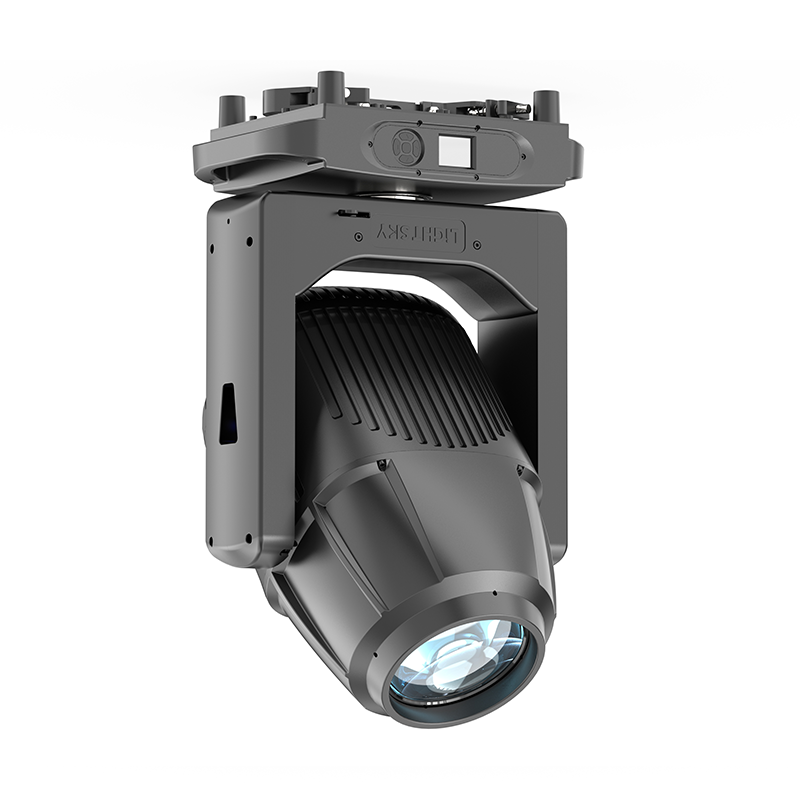
Concert lighting often requires several different optical functions within the same production. Narrow beams can define aerial effects, spot projection can add texture and visual detail, while wash lighting provides broader coverage. We see AURORA AQUA from LiGHT SKY as a practical example of how one fixture can combine these requirements through a beam, spot, and wash configuration. The fixture uses a 160 mm front lens, a USHIO NSL U8 lamp, CMY color mixing, gobo systems, prisms, frost filters, and electronic focus. It is also specified with IP66 protection and a Dynamic Temperature Control System, giving lighting teams a fixture designed for both indoor and outdoor stage applications.
Why Concert Lighting Needs More Than One Optical Function
A concert lighting system rarely performs one visual task throughout an entire show. Different sections of a performance may require concentrated aerial effects, defined projections, or broad stage illumination. Treating these functions as separate lighting categories helps designers understand why optical versatility matters.
Beam lighting is generally associated with narrow, concentrated shafts that can become visible across the stage environment when atmospheric conditions allow. Spot lighting is more suitable when designers need to project patterns or define a particular area. Wash lighting works differently by spreading light across a wider field.
A fixture capable of changing between these optical roles can therefore give designers another way to organize the lighting system. A 3in1 BSW moving head beam light can combine beam, spot, and wash functions rather than limiting one fixture to a single optical purpose.
Managing Beam Width and Projection Flexibility
Beam control depends heavily on the relationship between optical design, fixture position, projection distance, and zoom range. A narrow beam can create a concentrated visual line, while a wider setting distributes the output across a larger area.
For concert productions, this flexibility can be useful when the stage layout changes between songs or performance segments. Designers may need tight aerial effects during one sequence and broader coverage during another without physically repositioning the fixture.
The optical system also influences how clearly beams, patterns, and projected shapes appear. A large front lens and controlled zoom mechanism can contribute to the consistency of the projected image, although the final result still depends on fixture placement, atmospheric conditions, and programming.
How Spot Functions Add Texture and Definition
Spot functions introduce another layer of control because they can combine focused illumination with projected patterns. Gobos are commonly used to add texture, movement, or recognizable shapes to stage surfaces and scenic elements.
For professional lighting systems, the interaction between focus, gobo selection, zoom, and movement determines how effectively these patterns can be integrated into a show. A fixture with both fixed and rotating gobo wheels gives designers different approaches to creating projected textures.
The use of prisms can further modify the projected image. Rather than simply increasing brightness, optical effects change how light is distributed and perceived. This distinction is important when designing layered concert looks where multiple fixtures must work together without producing excessive visual clutter.
Wash Coverage and Color Management
Wash lighting addresses a different requirement: covering a broader stage area with controlled color and intensity. Concert designers may use washes to establish a general atmosphere, illuminate performers, or provide a visual base behind more concentrated beam and spot effects.
Color control is particularly important when several lighting functions operate within the same scene. CMY color mixing allows designers to adjust color continuously rather than relying only on fixed color selections. CTO correction can also be used where color-temperature adjustment is required.
When evaluating lighting equipment, we therefore consider optical range and color control together. A fixture may offer broad wash capability, but its usefulness depends on how precisely designers can integrate that output with other lighting elements.
Control Systems and Movement in Concert Production
Versatility is not limited to optics. A moving-head fixture also needs suitable control options so designers can incorporate its functions into a larger lighting network. AURORA AQUA supports DMX512, RDM, Art-Net, and sACN, while offering several channel configurations. These protocols are commonly used for communication between lighting consoles and fixtures.
Pan and tilt movement provide another layer of flexibility. Rather than keeping the light directed at one fixed position, moving-head fixtures can redirect beams, spots, or washes during programmed sequences.
For theatrical lighting suppliers, understanding these control requirements is important when matching fixtures with existing consoles, network infrastructure, and programming workflows. Compatibility should be checked before deployment rather than assumed from the fixture category alone.
Outdoor Concert Conditions Require Practical Protection
Outdoor concerts introduce environmental considerations that do not apply in the same way to indoor venues. Moisture, temperature changes, ventilation, and installation conditions can all influence equipment selection.
A fixture intended for outdoor use therefore needs an appropriate protection rating and thermal-management approach. AURORA AQUA is specified with IP66 protection and an operating environment of -20°C to 45°C on the supplied product page. Its DTCS cooling system is designed to manage fixture temperature during operation.
These specifications do not remove the need for correct installation. Lighting teams still need to consider mounting, ventilation, power supply, signal connections, and the environmental conditions of the specific venue.
Creating a More Adaptable Concert Lighting Setup
A versatile fixture does not need to replace every other lighting type in a concert system. Instead, its beam, spot, and wash capabilities can help simplify specific parts of the lighting design while reducing the need for separate fixtures in selected applications.
The practical value of this flexibility depends on the production itself. Concerts that move frequently between aerial effects, patterned projections, and broader stage illumination may benefit more from multifunction fixtures than productions built around highly specialized lighting requirements.
This approach also allows us to define fixture roles before programming begins. By identifying which scenes call for narrow beams, focused projection, or wider coverage, we can determine where multifunction fixtures are most appropriate within the overall lighting system.
Applying AURORA AQUA to Concert Lighting
From our perspective, AURORA AQUA provides a clear example of how a multifunction moving head can address several concert-lighting requirements through one fixture design. Its beam range is specified at 1.8°–24°, while the spot range is 4°–45° and the wash range is 2.6°–43°. The fixture also combines gobos, prisms, frost filters, CMY mixing, CTO, focus, and movement control.
At LiGHT SKY, we position AURORA AQUA around this combination of beam, spot, and wash functions for concerts, theaters, TV studios, stadiums, and outdoor events. Its IP66 protection, optical system, control options, and thermal-management design provide lighting professionals with a multifunction fixture to evaluate according to their specific production requirements.
For teams comparing equipment, the key consideration is not simply how many functions a fixture lists, but whether its optical ranges, control protocols, environmental specifications, and effects correspond with the actual demands of the concert. This makes a structured technical evaluation an important step before integrating AURORA AQUA or similar BSW fixtures into a professional lighting system.