
What Event Planners Should Know About MINI WHALE and Simple Rain-Ready Planning in Outdoor Events
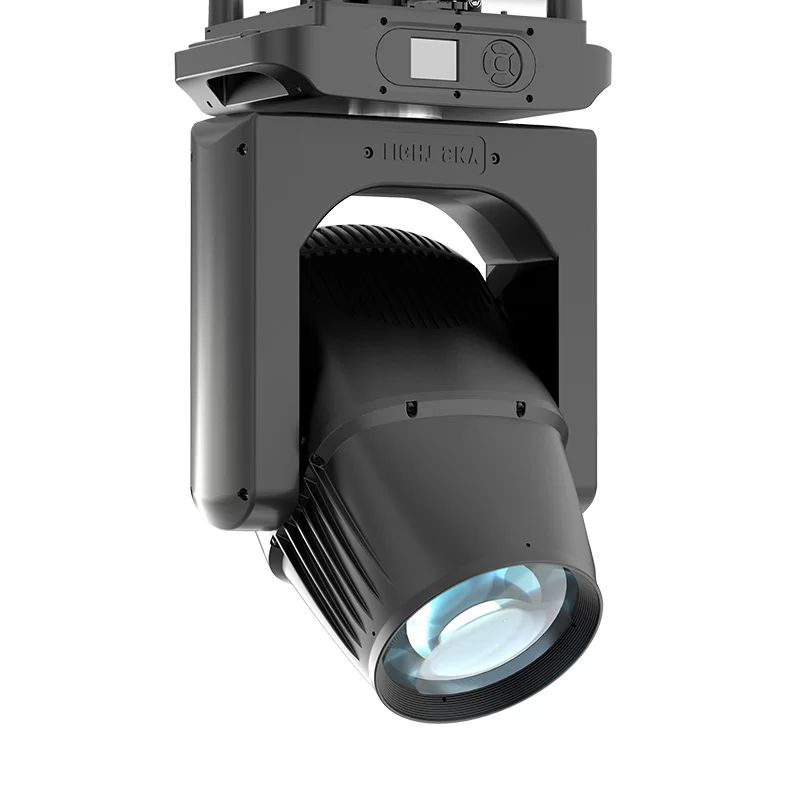
Outdoor events require more than a good lighting concept. Event planners also need to consider changing weather, equipment placement, power access, control connections, and how lighting should remain useful when the environment becomes damp. At LiGHT SKY, we designed the MINI WHALE as a compact pure-beam moving head fixture with IP66 protection, making it relevant to outdoor applications where rain-ready lighting is part of the planning process.
Start With the Meaning of Weather Protection
Weather-ready planning should begin with understanding what an equipment rating actually tells us. An IP66 rating indicates a defined level of protection against dust and water exposure, but it should not be treated as permission to ignore installation conditions or general electrical safety.
For planners, this means lighting selection is only one part of preparation. Equipment should still be positioned appropriately, power distribution should be planned carefully, and cables and connectors should be managed to reduce unnecessary exposure to standing water.
A waterproof moving head light can therefore simplify one part of outdoor planning, but it does not replace sensible site management. The goal is to match the fixture’s protection level with the actual environment and event requirements.
Think About Beam Direction Before the Event
Rain can change how audiences perceive lighting. Moisture in the air may make narrow beams more visible, while surfaces, structures, trees, and architectural elements can provide useful projection backgrounds.
For this reason, planners should consider beam direction during the site survey rather than waiting until installation. A narrow beam can create a defined visual path, but its usefulness depends on distance, mounting position, surrounding structures, and the intended viewing area.
The MINI WHALE uses a 1.3° beam angle and a φ174mm optical lens. Its specifications also list additional narrow beam options and a 7000K color temperature. These characteristics provide practical parameters for deciding where a beam fixture may fit within an outdoor lighting layout.
Coordinate Lighting With the Rest of the System
Outdoor lighting rarely works as an isolated element. Event planners may need to coordinate moving fixtures with music, stage equipment, video systems, architectural lighting, and other controlled devices.
That makes control compatibility important during advance planning. The MINI WHALE supports DMX512 and RDM, while ArtNet is available as an optional protocol. It also provides 15 control channels and DMX/RDM connectors in either three-pin or five-pin XLR configurations.
For a lighting team, these specifications provide a clearer basis for preparing the control system. They can determine addressing, signal distribution, cable requirements, and fixture grouping before equipment reaches the event site.
This is also where DJ moving head lights should be considered as part of the wider lighting network rather than simply as visual effects. Their value depends on how effectively movement, color, beam effects, and timing are integrated with the overall show design.
Prepare for Rain Without Overcomplicating the Layout
A practical rain-ready plan does not need to become unnecessarily complicated. Start by identifying which fixtures are exposed, where water could collect, and which equipment needs additional protection or controlled access.
The lighting layout should also leave enough room for technicians to inspect connections and make adjustments safely. Power and signal routes should be organized so that routine maintenance does not require unnecessary movement around wet areas.
Fixture weight and dimensions are additional considerations. The MINI WHALE measures 344 × 238 × 601 mm and has a listed net weight of 22.1 kg. Such specifications should be considered when planners and production teams select trussing, stands, transport methods, and installation positions.
Use Beam Effects With a Clear Visual Purpose
Rain-ready lighting is not only about protection. Event planners should also consider whether each fixture contributes something useful to the visual design.
Beam fixtures can help establish directional movement across a venue, emphasize stage areas, or create layered effects when combined with other lighting types. However, using too many effects at once can make the lighting system harder to coordinate and reduce visual clarity.
The MINI WHALE includes an eight-facet prism and a 24-facet prism, with independent rotation and combination options. It also provides a static gobo wheel, motorized focus, frost, adjustable pulse strobe, random strobe, and linear dimming. These functions allow designers to build different beam treatments while keeping the fixture’s primary role centered on beam output.
Build a Practical Outdoor Checklist
Before an outdoor event begins, we recommend checking the fixture’s protection requirements against the planned location. Confirm mounting arrangements, cable routing, power distribution, control connections, and access for technicians.
The operating environment should also be considered. MINI WHALE is specified for an operating environment of -10°C to 40°C, while its maximum surface temperature is listed as no more than 80°C. These values should be considered when evaluating the expected site conditions and installation arrangement.
A simple checklist helps teams separate lighting design decisions from weather-related preparation. This makes it easier to identify what the fixture can address directly and what still requires appropriate site planning.
Making Outdoor Lighting Easier to Plan
For us, MINI WHALE is designed around a straightforward combination of narrow-beam output, moving-head control, optical effects, and IP66 protection. LiGHT SKY positions the fixture for events including weddings, nightclubs, car shows, and other dynamic applications. Its 540° pan and 270° tilt ranges further support flexible positioning during event programming.
For event planners, the main lesson is simple: rain-ready lighting starts with matching equipment protection to the site, then building the rest of the system around safe installation, practical control, and purposeful visual design. With the MINI WHALE, LiGHT SKY provides an outdoor-oriented beam fixture that can be incorporated into this planning process without losing sight of the basic requirements of event production.