
MINI WHALE Ideas For Community Fair Stages Without Overcomplicating The Setup
Community fairs often bring together very different activities within a limited stage area. A band may follow a children’s performance, a local speaker may need a clear presentation space, and evening entertainment can call for a more energetic visual atmosphere. Professional moving head lights can help connect these sections without requiring an excessively complicated lighting design. At LiGHT SKY, we approach such applications by considering what each part of the program actually needs, rather than adding effects simply because they are available.
Start With A Simple Lighting Plan
Community stages usually have practical limitations. Setup time may be short, available rigging points can vary, and the same fixtures may need to support several types of performances. A useful plan therefore separates essential visibility from decorative effects before any programming begins.
Stage position also affects the final result. Fixtures placed too close to performers can create harsh angles, while excessive movement near the audience may become distracting. Establishing several useful beam positions in advance makes it easier to change the atmosphere without rebuilding the entire setup.
A clear lighting map can save considerable adjustment time during a busy fair schedule.
Match Effects To Different Activities
We understand that different performances require tailored visual treatments. We maintain relatively stable illumination for spoken presentations to ensure clarity and focus. For live music performances, we incorporate dynamic movement, color shifts, and crisp lighting effects to boost on-stage energy. We also adjust our visual balance individually for children’s shows, dance performances, and community ceremonies, as each event type demands a unique lighting approach.
Programming separate cues gives operators greater control over these transitions. A slower scene can support announcements, while faster movement or strobe effects can be reserved for selected musical moments. Such differentiation also keeps the audience from becoming visually fatigued by continuous changes.
Good programming is less about using every available function and more about knowing which functions deserve attention.
Use Compact Equipment With Purpose
A waterproof moving head light can be particularly useful for community events that take place under variable outdoor conditions, provided the fixture is appropriate for the intended installation. Weather protection, fixture weight, beam characteristics, and available control infrastructure all influence whether a model fits the production.
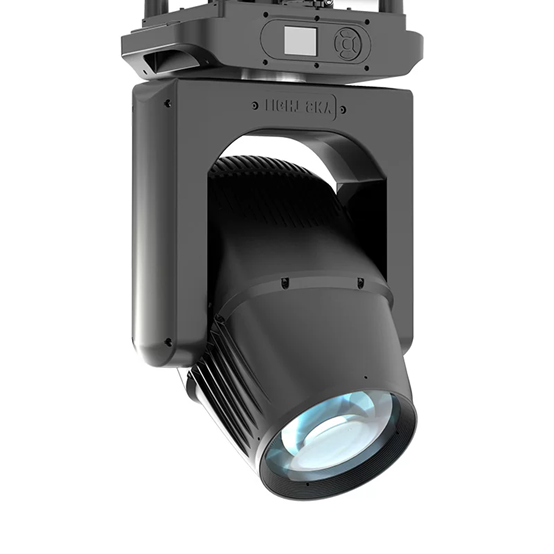
MINI WHALE from LiGHT SKY combines a compact moving-beam format with several optical effects. Its effect system includes an 8-facet prism and a 24-facet prism, each capable of bidirectional independent rotation, individual switching, and multiple combinations. Motorized focus, an independent frost effect, adjustable pulse strobe from 0.5–12Hz, random strobe, and 0–100% linear dimming provide additional programming options within a compact fixture.
For a community fair, these functions can be assigned selectively rather than activated simultaneously, keeping the overall show easier to operate.
Build Visual Changes Around The Program
Program timing should influence lighting behavior. Opening remarks might use restrained brightness, followed by a gradual increase in movement as entertainment begins. Such sequencing creates a sense of progression without demanding a large number of fixtures.
Music cues can also provide useful reference points. A lighting operator may synchronize beam movement with significant transitions rather than attempting to follow every musical detail. This approach reduces unnecessary activity while giving major moments greater visual definition.
A few carefully timed changes can make the stage feel different from one section to the next.
Keep Audience Comfort In Mind
Community fairs often attract audiences standing or sitting at many different angles. Beam paths should therefore be checked from the front rows, side areas, and locations close to the stage. What appears balanced from the control position may look much brighter from another viewing point.
Strobe effects deserve particular care as well. Adjustable frequency provides flexibility, but that does not mean high-speed flashing should remain active for long periods. Operators can reserve stronger effects for short musical passages and use calmer scenes elsewhere.
Audience comfort should remain part of the lighting plan alongside visual impact.
Simplify Control And Rehearsal
We believe small event teams greatly benefit from streamlined control layouts. We place frequently used cues within quick and easy reach for operators, while keeping less common functions accessible without disrupting or cluttering the core workflow.
Rehearsal time can also be used to identify which effects genuinely contribute to the show. Testing every possible combination is rarely necessary. Checking key scenes, movement limits, color transitions, focus positions, and blackout moments usually provides more practical value.
The simpler the operating logic, the easier it becomes to respond to an unexpected schedule change.
Think Beyond The Stage
Lighting does not have to stop at the performance area. A modest amount of carefully directed illumination can help connect the stage with nearby decorative elements or create a visual boundary around the event space. However, excessive spill can compete with vendor areas, signs, displays, and pedestrian routes.
We find background surfaces are particularly useful for beam effects because they give movement somewhere visible to land. We as designers can look for suitable walls, temporary scenic elements, or other surfaces, while avoiding sensitive areas that should remain visually clear.
The surrounding environment can become part of the composition without requiring additional layers of equipment.
Conclusion
Community fair lighting works best when technology follows the rhythm of the event. Clear stage visibility, sensible beam placement, restrained color changes, and carefully timed effects can create variety without turning a modest production into an unnecessarily complex system.
We apply that philosophy at LiGHT SKY, where fixture functions are considered in relation to real production requirements. We find professional moving head lights deliver outstanding flexibility when we assign targeted functions to their movements and visual effects. Meanwhile, we deploy waterproof moving head lights for outdoor scenarios that require reliable weather protection. With well-structured lighting cues and thoughtful fixture placement, we can significantly enrich the overall visual texture and artistic appeal of even compact community stages.