LED Moving Head Spotlight vs Purchase: A Cost-Benefit Guide for Event Producers
As event production budgets tighten and technical demands increase, lighting decision-making has become more strategic. For many event producers, the choice between renting and purchasing an LED moving head light system directly influences both short-term cash flow and long-term operational efficiency. The LED BSWP 4IN1 moving head spotlight is often used as a reference in this decision, as it integrates beam, spot, wash, and profile functions within a single unit suitable for varied stage wash lighting requirements. Manufacturers such as LiGHT SKY continue to refine solutions like the SUPER SCOPE PLUS to meet the needs of touring shows and fixed installations. This article evaluates the cost-benefit logic behind ownership versus purchase strategy in professional lighting deployment.
Cost Structure and Initial Investment
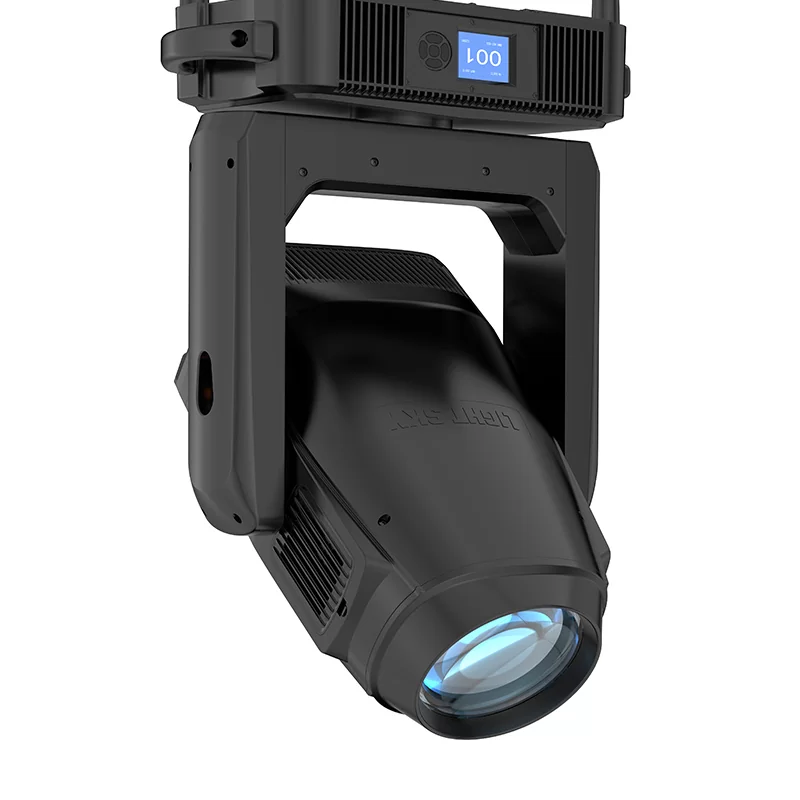
When evaluating an LED moving head light, the primary distinction between renting and purchasing lies in upfront capital expenditure. Purchasing units such as the LED BSWP 4IN1 moving head spotlight requires higher initial investment but reduces recurring rental fees over time. In contrast, rental models allow producers to scale equipment based on project size without long-term financial commitment. The SUPER SCOPE PLUS from LiGHT SKY illustrates the value of ownership for high-demand productions, offering a 41,000 lm output and a 180mm high-precision lens optimized for consistent stage wash lighting. For producers with frequent events, ownership may provide predictable budgeting advantages, while rentals remain suitable for irregular production schedules.
Operational Flexibility and Performance
Beyond cost, flexibility and performance consistency are central to the decision. The LED moving head light category, especially multi-function systems like the LED BSWP 4IN1 moving head spotlight, allows designers to consolidate beam, spot, wash, and profile effects into one fixture. SUPER SCOPE PLUS enhances this with dual rotating gobo wheels and a ±55° cutting module, supporting precise visual design without distortion. In large venues, reliable stage wash lighting ensures even coverage, while long-throw capability supports stadium-scale applications. For productions requiring frequent design changes, owning such fixtures can streamline programming workflows and reduce setup variability.
Maintenance, Longevity, and Production Planning
Maintenance is another key factor influencing total cost of ownership. While rental equipment is typically maintained by suppliers, purchased LED moving head light systems require in-house servicing planning. The LED BSWP 4IN1 moving head spotlight and LiGHT SKY SUPER SCOPE PLUS are designed for durability and transport efficiency, which helps reduce downtime in touring environments. However, lifecycle management—including LED module aging and optical calibration—must be considered in long-term budgeting. For production teams prioritizing continuous stage wash lighting performance, structured maintenance schedules can extend equipment lifespan and stabilize output consistency across multiple shows.
Strategic Lighting Decisions for Long-Term Production Efficiency
Choosing between renting and purchasing an LED moving head light system ultimately depends on production frequency, budget structure, and technical requirements. The LED BSWP 4IN1 moving head spotlight demonstrates how multifunction integration can reduce fixture count while maintaining flexibility in stage wash lighting design. For high-utilization environments, ownership of systems like the LiGHT SKY SUPER SCOPE PLUS may offer operational stability and long-term cost efficiency. Conversely, rental strategies remain effective for variable or short-term production demands, allowing event producers to align lighting resources more precisely with each project’s scope.