
LED Beam Moving Head vs LED Wash Moving Head: Choosing the Right Tool for Your Rig
In modern stage lighting design, selecting between an LED beam moving head and an LED wash moving head is a key decision that affects both visual impact and system flexibility. While both fixtures are widely used in concerts, theaters, and live events, their functions differ in beam characteristics, coverage, and application scenarios. The moving head wash light category, in particular, has evolved with LED technology, offering more control and efficiency than traditional discharge fixtures. At LiGHT SKY, product development focuses on balancing these two lighting approaches, helping users build more adaptable and efficient rigs based on real production needs rather than visual assumptions alone.
Beam Definition and Visual Focus
An LED beam moving head is typically designed for long-throw, high-intensity effects with narrow beam angles. It is often used to create aerial effects, sharp cuts, and rhythmic movement patterns in lighting programming. In contrast, an LED wash moving head emphasizes wider coverage and smoother color blending, making it suitable for stage washes and audience illumination. While a moving head wash light can provide soft transitions and consistent background lighting, the beam fixture is more precise and directional. In practice, many lighting designers combine both to achieve layered compositions, where beam effects add structure and wash units provide spatial balance.
Color Mixing and Application Flexibility
The LED wash moving head generally relies on RGBW or similar LED systems to deliver broad and uniform color output. A moving head wash light is often chosen when consistent stage coverage and flexible color temperature control are required. On the other hand, an LED beam moving head prioritizes intensity over spread, which can limit its use in general lighting but enhance its effectiveness in dynamic moments. For system designers, understanding these distinctions is essential when allocating fixture roles across a rig. In many setups, LiGHT SKY recommends using wash fixtures as the base layer and beam fixtures as accent tools to maintain visual clarity and control.
Integrated Design Approach with AQUAPEARL-PRO II
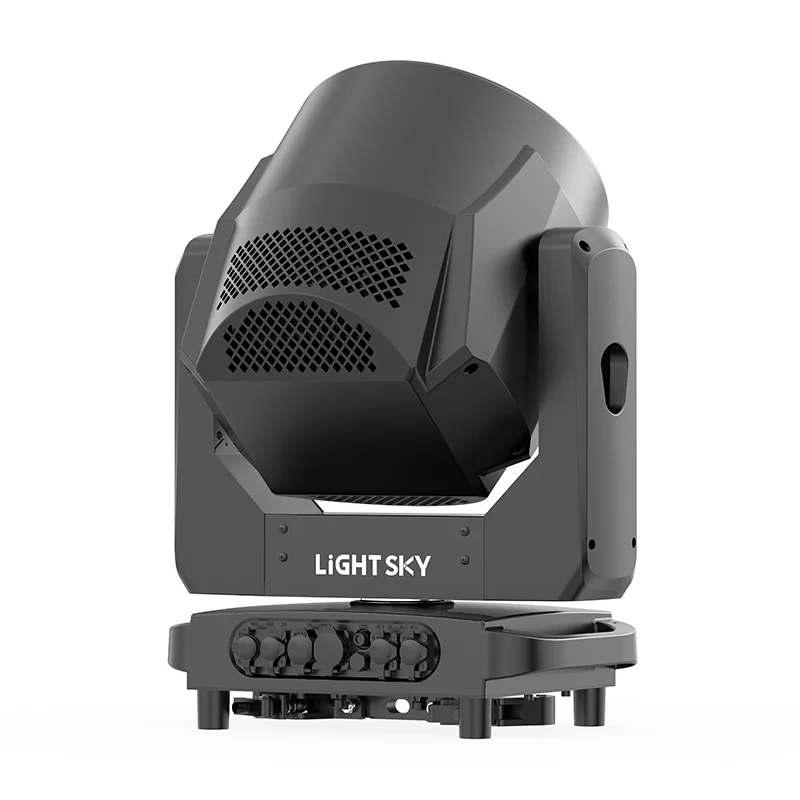
LiGHT SKY’s AQUAPEARL-PRO II demonstrates how modern design can bridge the gap between an LED beam moving head and an LED wash moving head. Equipped with 19pcs 40W RGBW LEDs, it delivers both beam-like intensity and wash-style coverage within a single unit. The 5°–45° optical zoom allows the fixture to shift between narrow effects and wide-area illumination, supporting the role of a flexible moving head wash light in complex productions. Additional features such as individual pixel control, rotating front lens effects, and IP66 protection expand its usability in both indoor and outdoor environments. This hybrid approach reduces the need for separate fixtures while maintaining functional distinction between beam and wash roles.
System Selection and Rig Optimization Strategy
Choosing between an LED beam moving head and an LED wash moving head is ultimately a matter of system design rather than preference. A well-balanced rig often relies on both, with each fixture contributing specific visual functions. The moving head wash light remains essential for foundational lighting, while beam units provide movement and focus. Products like AQUAPEARL-PRO II from LiGHT SKY illustrate how integration can simplify rig planning without sacrificing control. By understanding how each fixture operates within a lighting system, designers can build more efficient and scalable setups that align with different production demands.