Keeping The Lighting Flexible For Product Reveal Moments With White Laser Light
Product reveal events depend on timing, contrast, and visual focus rather than sheer fixture quantity. White laser light can create a narrow visual path that draws attention toward a presentation area while preserving darker surroundings for dramatic contrast. Such control becomes particularly useful when the reveal must feel intentional without filling the entire room with illumination. At LiGHT SKY, we view lighting as part of the storytelling process, so fixture selection begins with the spatial relationship between the audience, product, stage, and surrounding architecture.
Shaping Attention Through Beam Control
Product launches often contain several visual moments within the same program: anticipation, countdown, reveal, close-up presentation, and post-reveal celebration. Each stage benefits from a different lighting balance. Narrow beams can create visual direction, while broader sources provide enough ambient illumination for people and scenery.
Rather than placing identical fixtures across every position, designers can assign specific roles to different lighting units. One group may define the stage perimeter, another can emphasize architectural features, while concentrated beams reserve visual intensity for the main presentation area.
This approach makes commercial lighting supplier selection more than a purchasing decision. Optical characteristics, control compatibility, output behavior, and fixture dimensions all affect how effectively the lighting plan translates from drawing to reality.
Using Contrast During The Reveal
Darkness has an important function in presentation design. Keeping selected areas subdued before the reveal allows brighter elements to carry greater visual weight once the cue arrives. Excessive illumination across the entire stage can flatten this contrast and make the product announcement feel less distinctive.
Color temperature also deserves attention. Neutral or cool white output can make materials appear crisp, while warmer surrounding illumination may create separation between the featured object and its environment. Designers should test surfaces in advance because glossy finishes, metallic textures, glass, and white packaging can react very differently to the same fixture.
With white laser light, precise beam placement can become part of that contrast strategy. A concentrated beam may define an entry path or frame a presentation zone without requiring broad illumination across every visible surface.
Integrating Compact High-Intensity Fixtures
Compact fixtures can be useful when a product reveal takes place in a venue with limited rigging positions or restricted stage depth. Smaller units allow designers to consider positions that might be impractical with larger equipment, especially around scenic elements and compact truss structures.
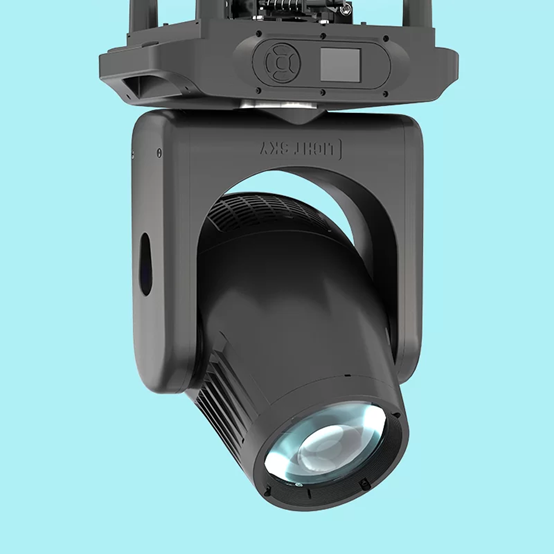
MINI LASER AQUA is one example from our range. Its 100W white laser source works with a 1.1° beam angle and 128mm front lens, producing a tightly defined projection path suited to controlled visual accents. The fixture is designed for outdoor stage and entertainment applications, rather than general indoor product-display use, so its application should match the specified environment.
Such characteristics also demonstrate why commercial lighting supplier evaluation should include optical design rather than relying only on brightness figures. Beam angle, lens dimensions, fixture placement, and viewing distance collectively shape the final effect.
Coordinating Cues With Presentation Content
We find lighting cues work best when they follow the rhythm of the event instead of competing with it. For example, during an introductory video, we may keep the stage under restrained illumination. We can then use a short transition to shift attention toward the reveal position, and bring in brighter supporting light once the product becomes visible.
Programming should also account for movement between cues. Sudden changes can feel dramatic, but gradual intensity shifts may suit premium launches where visual refinement matters more than spectacle. Designers can build several cue layers and adjust them during rehearsal after seeing how the product reacts under actual lighting.
We find modern moving head fixtures bring valuable positional flexibility to our design process, especially when we need a single fixture to serve multiple scenes. We believe their true value comes from thoughtful programming, balanced movement speeds, and clear visual priorities, rather than simply stacking more lighting effects.
Balancing Technology With Visual Simplicity
Technical capability does not automatically produce better presentation design. A reveal may become visually confusing if beams, colors, gobos, video content, and moving effects all compete at the same moment. Strong programming often comes from deciding what should remain quiet.
A practical workflow begins with the product itself. Consider its size, surface texture, brand colors, viewing distance, and the camera angles that will capture the announcement. From there, lighting positions can be assigned according to function instead of fixture availability.
The same principle applies to moving head light fixtures: movement should have a visual reason. A slow repositioning cue might redirect attention between two display areas, while a stationary beam can provide a stable frame around the main subject. This distinction keeps technical movement connected to the story.
Conclusion
Successful product reveals rarely depend on maximum brightness or the largest number of effects. Clear sightlines, controlled contrast, suitable color temperature, and carefully timed cues can create a stronger sense of anticipation while keeping the presentation visually coherent. White laser light becomes especially useful when concentrated projection is needed without turning every part of the venue into the visual focus.
Thoughtful equipment selection matters just as much as programming, which is why working with the right commercial lighting supplier can help teams evaluate optical performance, control systems, and application requirements together. At LiGHT SKY, we approach each project through that practical lens, combining technical considerations with the visual purpose of the event so the lighting supports the reveal rather than overshadowing it.