Deploying Compact IP66 Luminaires for Dynamic Pop-Up Stage Installations
Pop-up performances and temporary activation spaces require rapid deployment frameworks where physical equipment footprint directly dictates logistical viability. When production engineers evaluate gear options for mobile concert stages or temporary brand showcases, selecting a high-efficiency led moving wash resolves the constant conflict between heavy fixture weight and high luminous output.
The primary challenge in temporary environments centers on achieving maximum visual punch under unpredictable weather conditions without overburdening lightweight rigging trusses. Resolving this engineering dilemma demands a careful balance of miniaturized thermal design, high-output multi-chip LED engines, and robust chassis protection.
Maximizing Output Footprint Ratios with High-Power Miniature Arrays
Temporary staging locations often feature restricted weight limits on overhead crossbars, forcing production crews to eliminate heavy, multi-source discharge units from their touring packages. Modern temporary events rely instead on concentrated solid-state configurations that pack professional-grade lumen counts into significantly smaller physical enclosures.
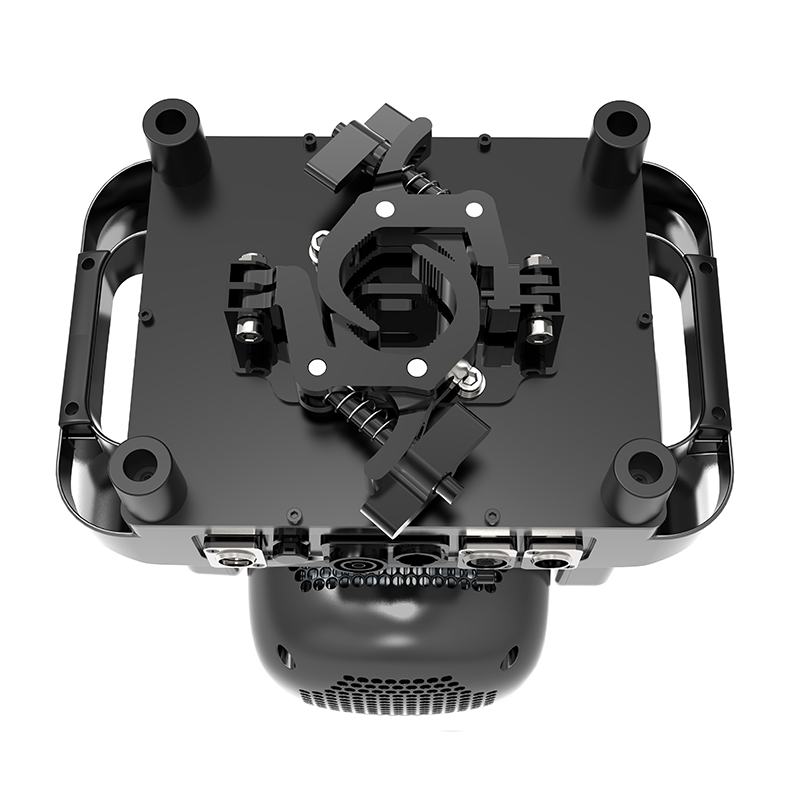
We engineer the AQUAPEARL-MINI with 7 pieces of high-efficiency 60W RGBW four-in-one LEDs that combine to deliver a total luminous flux of 7,100 lumens alongside 23,500 lux measured at a 5-meter distance.
This dense optical arrangement allows lighting directors to generate saturated color fields and powerful mid-air beam effects from a compact housing that weighs only 12.3 kg.
Technical teams gain the creative freedom of a large-format wash fixture without compromising structural safety margins on temporary truss systems.
Adapting to Rapid Environmental Shifts with Weatherproof Sealing
Pop-up activations frequently take place in open-air courtyards, city plazas, or beachfront boardwalks where sudden rain squalls or heavy morning moisture can jeopardize sensitive electronics. Standard indoor-rated theatrical hardware demands expensive protective domes or emergency teardowns when weather forecasts turn unfavorable.
Integrating a certified IP66 housing rating directly into a scaled-down moving head eliminates these operational vulnerabilities by sealing internal optics and pan-and-tilt motors against driving water and dust.
Commercial lighting suppliers increasingly specify these weather-sealed builds for rental inventories because rugged external chassis designs drastically reduce maintenance overhead during outdoor tours.
Event operators can rig fixtures confidently hours before showtime, knowing environmental exposure will not compromise performance reliability.
Harnessing Flexible Zoom Ranges for Multi-Use Performance Spaces
Temporary venues routinely shift functions throughout the day, transitioning from daytime corporate keynote presentations into high-energy evening musical performances within the same footprint. Lighting designers need optical systems that can transition instantly from a tight, punchy beam to an expansive, glare-free wash covering the entire stage floor.
Incorporate a linear electronic zoom mechanism with a 4° to 32° beam angle and a 5° to 50° zoom angle to alter coverage fields instantly via console commands. A narrow setting creates defined architectural focal points, while a wide spread bathes performers in even, homogenized color.
This optical versatility ensures a single fixture type can handle every cue on dynamic event schedules.
Unlocking Creative Depth Through Individual Pixel and Halo Mapping
Modern audiences expect visually complex light shows even on intimate stages, requiring fixture software that goes beyond basic dimming and color mixing. Individual LED pixel control empowers programmers to build intricate, chasing color gradients and sweeping motion patterns across the face of the luminaire.
Furthermore, a separately controllable front ring aura adds dynamic halo effects that remain visually engaging even when the main optic faces directly toward the audience. Combining these internal macro layers with uniform RGBW color mixing enables designers to craft signature looks that elevate standard pop-up stages into memorable visual experiences.
Streamlining Network Integration and Data Routing on Fast-Paced Rigs
Tight load-in windows make it important to plan signal routing and verify control connections before the event.
It is essential to have native protocol compatibility for industry-standard DMX512, RDM, and Art-Net architectures in order to provide reliable communication between lighting desks and distant fixtures.
Technicians should use the monitoring functions documented for the selected fixture and compatible control system.
At LiGHT SKY, we integrate these powerful networking options to guarantee zero latency and complete stability for the entirety of time-coded live performances that are complex.
Managing Thermal Dissipation within Compact Chassis Geometries
Shrinking the physical footprint of a high-output moving head introduces intense thermal management hurdles because high-wattage diode arrays generate concentrated heat in confined spaces. Intelligent temperature control software continuously monitors internal thermal loads, dynamically regulating cooling fan speeds to protect delicate semiconductor junctions without producing distracting acoustic noise.
This proactive heat dissipation prevents thermal throttling during prolonged, high-intensity static color states common in corporate branding events. Engineering this balance of thermal efficiency and mechanical silence guarantees consistent output from the first cue to the final curtain.
Executing successful pop-up productions relies on hardware that bridges the gap between touring-grade visual impact and lightweight logistical convenience. By combining high-lumen optical output, independent pixel control, and rugged weatherproofing into a portable footprint, production teams can deliver exceptional lighting design anywhere.