
Dealer Conferences: Easy Lighting Ideas With Professional Stage Lighting
A dealer conference has to communicate a great deal in a limited amount of time: new products, sales priorities, market insights, recognition, and plans for the coming year. The visual environment can help separate these sections and keep a long agenda from feeling monotonous. A practical stage lighting manufacturer should therefore be considered not only for fixture performance, but also for how lighting can support presentations, conversations, demonstrations, and audience attention. At LiGHT SKY, we understand that a successful conference does not need complicated effects everywhere; thoughtful placement and well-timed changes can often create a more polished experience.
Start With The Conference Agenda
The agenda provides a useful foundation for the lighting plan. A keynote speech may benefit from steady front illumination, whereas a product announcement could use stronger background contrast to signal a change in focus. Recognition sessions can introduce warmer tones, while panel discussions usually require balanced coverage across several positions. Linking lighting states to these program changes gives the event a visual rhythm without making every transition feel theatrical.
We regard the visual relationship between the stage and presentation screens as another key practical consideration. Dealer conferences often rely heavily on charts, product visuals, videos, and sales data, so we avoid excessive brightness or oversaturated colors behind presenters, as these elements can compete with critical on-screen content. By separating presenters, screen content, and decorative lighting into independent visual layers, we help audiences clearly focus their attention and follow event information effectively.
The most useful lighting plan begins with the purpose of each conference segment rather than with a list of effects.
Make A Compact Setup Work Harder
We know conference venues typically integrate many functional areas besides the main stage, including registration zones, audience seating, exhibition displays, catering spaces and meeting rooms. For this reason, we find flexible lighting layouts far more practical than bulky systems designed around a single visual effect. We rely on versatile fixtures that can cover multiple positions and adjust beam characteristics freely, which reduces unnecessary equipment adjustments throughout the event.
For dealers evaluating stage‑light manufacturers, production capability is only one part of the assessment. Technical documentation, fixture consistency, control compatibility, spare-parts availability, and communication with project teams can influence how easily equipment fits into a real event workflow. A supplier that understands different conference formats can also help translate general creative ideas into more practical lighting requirements.
Efficiency comes from giving each fixture several useful roles while keeping the overall design easy to operate.
Use Color With Greater Restraint
Color can reinforce the identity of a dealer conference, particularly when the event incorporates corporate graphics or a new campaign theme. However, repeating the same saturated tone across the entire stage may flatten the visual hierarchy. A more controlled approach could use neutral light for speakers, restrained color on the background, and stronger accents during selected transitions.
Skin tones deserve particular attention during executive speeches and panel sessions. A stage may look impressive from the back of the room while appearing overly colored through a camera, so testing the lighting from audience and camera positions can reveal problems before the conference begins. This matters even more if the event is recorded for dealers who cannot attend in person.
A restrained palette gives designers room to introduce stronger visual moments without making the entire conference look equally intense.
Consider The Venue Before Selecting Equipment
A ballroom with a low ceiling presents different challenges from a convention hall with a high rigging position. Throw distance, beam spread, stage depth, sightlines, available power, ambient light, and screen placement all influence fixture selection. These practical conditions should be documented before purchasing or renting equipment because the same fixture can behave very differently under different installation conditions.
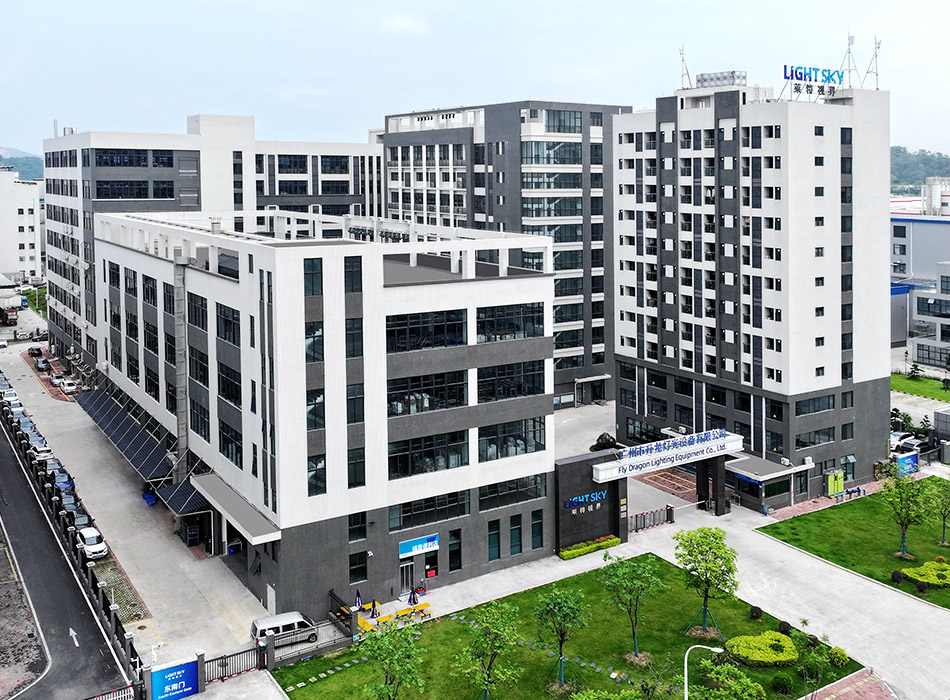
The supplier’s manufacturing background can also matter during dealer projects that involve repeated events or regional installations. At LiGHT SKY, we combine R&D, production, distribution, OEM, and ODM capabilities, and our company was established in Guangzhou in 1993. With more than 300 employees and over three decades of industry experience, we work across professional stage-lighting applications while supporting different project requirements. This manufacturing perspective is useful when discussions involve not only individual fixtures but also consistency, customization, and longer-term equipment planning.
A clear venue assessment allows technical specifications to be judged against actual conditions instead of abstract performance figures.
Build Lighting Cues Around Human Attention
Dealer conferences often alternate between information-heavy presentations and more emotional moments such as awards, launches, or team recognition. The audience’s attention naturally changes throughout the day, which makes cue design an important part of the experience. A stable look can help people concentrate during detailed presentations, while a carefully timed shift can refresh attention before a new segment begins.
The same principle applies to movement. Moving effects can add energy, but constant motion may distract from a speaker or make presentation screens harder to follow. Lighting operators can reserve noticeable changes for openings, transitions, videos, or celebratory moments while keeping the main speaking areas visually stable.
A conference feels more coherent when every lighting change has a reason connected to the program.
Conclusion
Good conference lighting does not depend on filling the stage with effects. Its value comes from making information easier to follow, giving important moments greater distinction, and maintaining visual comfort throughout a demanding schedule. Once the agenda, venue, audience sightlines, camera requirements, and presentation content have been considered, equipment decisions become much easier to evaluate.
At LiGHT SKY, we view professional lighting as part of the communication environment rather than an isolated decorative element. Teams researching a stage lighting manufacturer can begin by defining the conference’s visual priorities and then assess fixtures, controls, installation requirements, and support around those needs. A reliable stage light factory can further contribute practical manufacturing knowledge when dealers need repeatable solutions across different events and venues.