
A Simple Lighting Story for Fashion Runways Built Around an LED Wash Moving Head
Fashion shows depend on visual restraint. Clothing, models, music, and movement already create a strong narrative, so lighting works best when it adds dimension without competing with the collection. An LED wash moving head can help shape that relationship through controlled color, brightness, and transitions. At LiGHT SKY, we approach this type of production with attention to how lighting supports the rhythm of a runway rather than simply filling the space with effects.
Establishing the Runway’s Visual Language
A runway usually has several visual zones: the main walking path, model entrance, presentation area, and audience surroundings. Each zone can receive a slightly different lighting treatment, allowing the audience to understand spatial changes without obvious visual breaks.
Color provides one of the easiest ways to establish that language. Neutral white can keep fabrics and skin tones visually natural, while carefully selected hues may support a collection built around a particular concept. Strong saturation should be used selectively because excessive color can alter how garments appear.
Brightness also needs careful coordination with the camera and audience. A look that seems dramatic from the seating area may produce unwanted contrast on video. Balancing front illumination with side and back accents gives designers more control over texture, silhouette, and depth.
Shaping Movement Along the Catwalk
The most effective runway cues often follow the model’s movement rather than changing randomly. A gradual shift can accompany an entrance, while a more defined transition may mark the arrival at the end of the catwalk. Such timing creates a visual connection between movement and lighting.
An LED stage wash lights setup can contribute to this process by providing broad, adaptable coverage across key areas. The fixture arrangement should account for the runway’s length, ceiling height, camera positions, and audience sightlines rather than relying solely on fixture quantity.
Lighting direction changes perception as well. Front illumination reveals garment details clearly, whereas side angles can emphasize fabric structure and body movement. Backlight, meanwhile, can separate a model from darker scenic elements and create a stronger silhouette during selected moments.
Creating Contrast Through Color and Intensity
Fashion collections frequently contain contrasting materials, from reflective fabrics to matte textiles. Lighting designers can use intensity and color temperature to help these surfaces retain visual distinction. A softer approach may suit delicate fabrics, while controlled directional emphasis can bring attention to structured silhouettes.
Rather than changing color with every musical phrase, designers can assign specific palettes to sections of the show. One tone might accompany the opening looks, another could signal a collection transition, and a restrained neutral state may bring attention back to the garments.
Subtle contrast can also make a venue feel larger. Brighter areas naturally attract attention, while darker surrounding spaces create visual separation. This technique is particularly useful when the runway itself needs to remain the strongest compositional element.
Using AQUAPEARL-PRO II With Controlled Effects
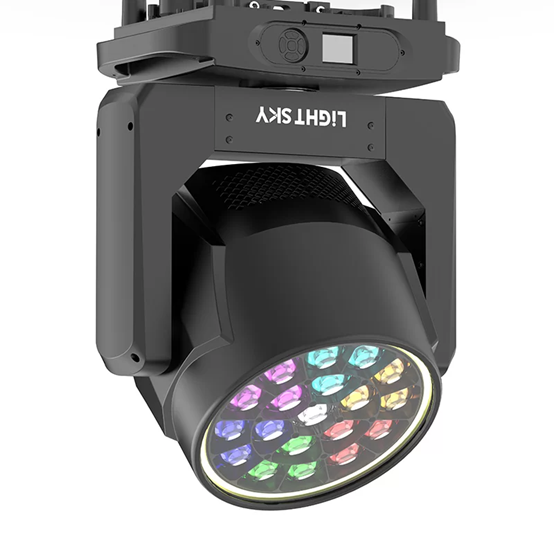
A practical fixture option is AQUAPEARL-PRO II, which combines an RGBW color mixing system with individually controlled LEDs, a linear electronic zoom, and an individually controlled front luminous ring. Its static and dynamic effect macros provide additional programming possibilities, while the independently controlled LEDs can create pixel-style color changes. These functions can be integrated into a runway design without requiring every cue to use an animated effect.
At LiGHT SKY, we consider these capabilities within the wider production rather than treating them as separate visual features. Individual LED control can support restrained color movement during an entrance, while the front ring can become a secondary visual element during transitions. Used sparingly, such details can add character without taking attention away from the collection.
The zoom function offers another way to reshape the stage picture. Wider coverage can maintain continuity across a longer catwalk, whereas a narrower look can create visual emphasis around a presentation point. Programming both states into different parts of the show gives designers more options without introducing unnecessary fixture changes.
Building a Cohesive Runway Cue Structure
Good cue design begins with the collection itself. Before programming, teams can identify changes in fabric, color palette, model grouping, music, and scenic composition. These observations provide practical reasons for lighting changes and help prevent effects from becoming disconnected from the show.
An LED wash moving head can then be assigned specific roles instead of being asked to perform every possible function. One group might provide consistent runway coverage, another could create background texture, while selected units handle transitions or accents. Dividing responsibilities makes the overall lighting picture easier to understand.
The final programming stage benefits from restraint. A runway does not need constant motion to appear dynamic; sometimes the strongest change is simply moving from one carefully balanced state to another. Cue timing, fade duration, and intensity relationships can make these transitions feel intentional while keeping the garments visually prominent.
Conclusion
A memorable fashion runway does not necessarily require elaborate effects. Clear spatial planning, thoughtful color choices, controlled contrast, and well-timed transitions can give the collection a distinctive visual setting while preserving attention on the clothes. The real value of an LED stage wash lights strategy lies in how naturally those elements work together across the entire presentation.
Runway lighting becomes more flexible once designers think beyond brightness and treat every cue as part of the show’s visual vocabulary. At LiGHT SKY, we bring that perspective into our lighting approach, focusing on practical control and creative possibilities that can adapt to different collections, venues, and production styles.