Creating Smoother Visual Transitions in Corporate Anniversaries With an LED Wash Moving Head
Corporate anniversaries often combine speeches, award presentations, videos, performances, and carefully designed stage moments, so visual changes need to feel connected rather than abrupt. An LED wash moving head can help create those transitions through color, intensity, direction, and timing. At LiGHT SKY, we view lighting as part of the event narrative, where technical choices should support the atmosphere without overwhelming the program.
Give Each Program Section Its Own Visual Identity
An anniversary event usually moves through several emotional stages. The opening may feel formal and restrained, while recognition segments, performances, and closing celebrations can require noticeably different atmospheres. Assigning each section a visual identity makes those changes easier for the audience to perceive.
Color is one of the simplest tools available. Neutral whites can support speeches and executive presentations, while warmer tones may add energy to celebration segments. Rather than switching between unrelated colors, designers can create a limited palette and adjust its intensity throughout the evening.
Brightness should follow the importance of the content on stage. During a keynote, excessive illumination can compete with the speaker or presentation screen. Once the program shifts toward entertainment, stronger saturation and movement can be introduced without changing the entire lighting concept.
Make Transitions Follow the Event Narrative
A polished transition does more than move from one cue to another. Its timing can reflect the relationship between two program sections. A slow fade may suit the change from a commemorative video to a speech, whereas a quicker shift can work well before a live performance.
An RGBW wash light gives designers access to multiple color components, making gradual tonal changes possible without relying on abrupt color swaps. This can be particularly useful during anniversary ceremonies where the visual language needs to remain refined.
Movement can contribute to transitions as well, although fixture movement should have a clear visual reason. A slow repositioning may widen the stage picture after a speech, while carefully timed movement can add momentum as the program enters a celebratory segment.
Balance Stage Lighting With Screens and Cameras
Large corporate events frequently rely on LED walls, projection surfaces, or presentation screens. Lighting therefore needs to coexist with digital content rather than compete with it. Highly saturated illumination directly behind a presenter, for example, can reduce visual separation and make the composition feel crowded.
Screen brightness also affects perceived stage intensity. Designers can evaluate the relationship between scenic light and display content during rehearsals, then adjust fixture levels accordingly. The objective is not simply to make the stage brighter but to establish a comfortable hierarchy between people, graphics, and scenery.
Camera coverage introduces another layer of consideration. Broadcast or recording cameras respond differently to brightness, contrast, and color than the human eye. Consistent front illumination, controlled background levels, and carefully selected color transitions can make the recorded event more coherent.
Applying AQUAPEARL-PRO II to Transition Design
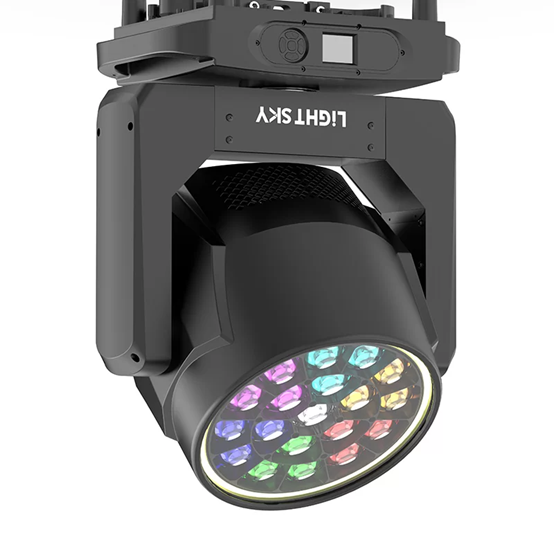
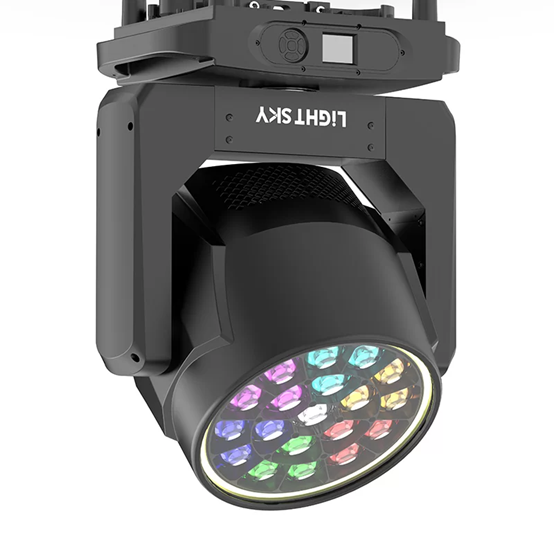
AQUAPEARL-PRO II offers 26CH, 98CH, 28CH, 100CH, and 35CH control options, with DMX512, RDM, Art-Net, and sACN protocols. Its 3-pin and 5-pin XLR connections, dual RJ45 ports, and LCD screen provide several practical choices for integration and operation within a larger lighting system.
At LiGHT SKY, we can approach those control options according to the scale and programming requirements of each production. Lower channel configurations may simplify straightforward looks, while more detailed modes allow greater access to color, movement, and effect parameters when the show calls for finer control.
Network-based protocols can also be useful in larger systems where multiple lighting fixtures need coordinated cues. Rather than treating connectivity as an isolated technical feature, programmers can consider how the fixture fits into the wider control architecture, especially when anniversary events combine stage lighting, media servers, and other show systems.
Build a Cue Structure That Feels Natural
Cue programming becomes clearer once the event schedule is divided into meaningful sections. Designers can identify entrances, speeches, awards, videos, performances, and closing moments, then determine which visual changes genuinely contribute to each transition.
An LED wash moving head can take on different responsibilities throughout the same event. It might provide restrained coverage during a presentation, add depth behind an award segment, and shift toward broader color movement during a performance. This approach makes better use of the fixture without requiring constant visual activity.
We believe transition speed deserves equal attention. We can use long fades to create elegance, yet they can feel sluggish for fast‑paced event segments. Conversely, rapid lighting changes build excitement but can become distracting during formal moments. We find matching fade times to speech cadence, music rhythm, and stage action creates a far more natural visual progression.
Conclusion
Smooth anniversary-event lighting comes from relationships between cues rather than isolated effects. Color, intensity, movement, screen content, and timing should each have a defined role, allowing the visual atmosphere to evolve alongside the program. A thoughtfully programmed RGBW wash light can contribute to that progression without making every transition visually dramatic.
Good technical planning also leaves room for creative adjustment during rehearsal. At LiGHT SKY, we regard control flexibility as part of that process, providing production teams with practical means to shape different segments of an event while maintaining a coherent overall visual story.