
Convention Plenary Sessions Show Design: Where An LED Wash Moving Head Adds Flexibility
Large convention plenary sessions often combine keynote speeches, panel discussions, award moments, videos, and live performances within one stage environment. Such variety places considerable pressure on the lighting plan because every segment needs its own visual rhythm without making the room feel constantly busy. An LED wash moving head can provide adaptable coverage, color, and movement while allowing the same stage architecture to support very different moods. At LiGHT SKY, we consider these changes from the perspective of audience visibility, scenic composition, camera framing, and cue timing rather than treating lighting as decoration alone.
Building A Visual Structure For Large Plenary Rooms
A plenary stage usually has several visual layers: presenters in the foreground, LED screens or scenic elements behind them, and architectural surfaces surrounding the stage. If all these layers receive identical illumination, the resulting image can appear flat, particularly in photographs and broadcast footage.
Lighting positions should therefore have distinct responsibilities. Front illumination can preserve facial clarity, side sources can add dimensional definition, while rear fixtures may separate people from the background. This arrangement creates visual depth without requiring excessive intensity.
Stage width also changes the calculation. A fixture that works well for a compact conference platform may leave darker areas across a larger stage. Instead of simply increasing brightness, designers can consider coverage, beam spread, mounting height, and fixture distribution together.
Shaping Different Program Segments
Keynote sessions usually benefit from restrained lighting because the speaker remains the primary focus. Subtle background color can establish brand identity while leaving sufficient contrast around the presenter.
Panel discussions require another approach. Several speakers may occupy different positions simultaneously, so the lighting needs to remain balanced across the seating arrangement. Excessive color movement behind the panel can also compete with facial expressions and presentation screens.
Entertainment sections provide more room for visual variation. Broader color changes, directional movement, or stronger background accents can mark the transition from formal communication to performance. The important point is that these changes should correspond with the program rather than appear randomly.
Choosing Optical Flexibility
Beam width has a direct influence on how efficiently a fixture can serve different stage areas. Narrower output can emphasize a particular position, whereas wider coverage works better for scenic surfaces or larger groups.
A useful lighting system should also respond to changes in stage layout. Conferences may alter furniture, presentation positions, or screen configurations between sessions, so fixed assumptions made during the initial design can become inconvenient later.
This is where an LED wash moving head becomes particularly practical. Entertainment lighting companies value its motorized positioning and adjustable optical characteristics, which allow technicians to modify coverage without physically relocating every fixture, making last-minute stage changes easier to accommodate.
AQUAPEARL-PRO II In Practice
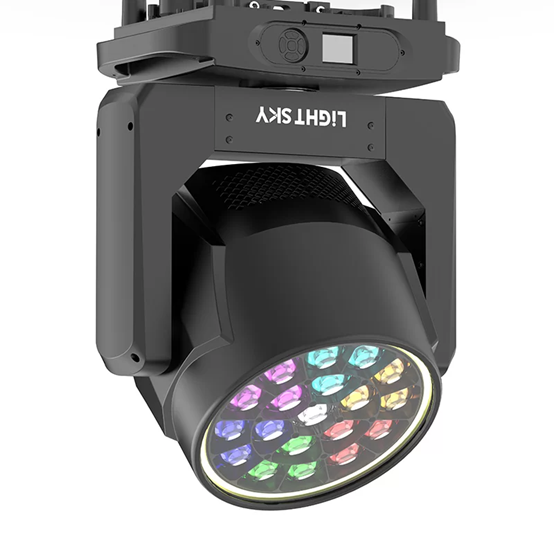
AQUAPEARL-PRO II uses 19 × 40W RGBW LEDs and combines wash and beam functions within the same fixture. Individual LED control expands the possibilities for color effects, while the fixture’s 5°–45° optical zoom allows the output to move between more concentrated and broader visual treatments. Its IP66 construction also supports indoor and outdoor stage applications, although venue requirements and installation conditions should always be assessed separately.
The beam-wash combination is particularly relevant to plenary productions because different sections of the program may call for different visual treatments. Rather than relying exclusively on broad illumination, the lighting team can introduce sharper accents when the stage composition requires more definition.
Refining Control And Cue Programming
Technical preparation becomes especially important in a conference environment where many transitions happen within a short period. A cue list might contain separate looks for speaker entrances, keynote presentations, video playback, panel discussions, sponsor segments, and closing remarks.
Programming should reflect those moments rather than simply storing large collections of color combinations. Naming cues according to the program makes operation more intuitive, while carefully timed fades help prevent distracting transitions during speeches.
Communication between lighting, video, stage management, and show calling teams matters just as much. Screen content may change the perceived brightness of the stage, while camera exposure can alter how colors appear on recordings. Rehearsal provides an opportunity to adjust these relationships before the audience enters.
Making The Stage Feel Consistent
Consistency does not mean keeping every scene identical. Instead, the visual language should remain recognizable even as individual elements change. A carefully selected color family, repeatable positioning logic, and controlled intensity range can connect separate sessions into one coherent event.
Large convention rooms can also have reflective floors, glossy scenic materials, or oversized LED displays. These surfaces may produce unwanted reflections if fixtures are aimed without sufficient testing. Small angle adjustments can sometimes improve the image more effectively than simply reducing output.
For productions involving several lighting operators or technicians, documentation is equally valuable. Position notes, cue references, fixture groups, and color intentions give the team a shared framework when changes become necessary during rehearsals.
Conclusion
A successful plenary lighting design balances communication with atmosphere. Speakers need clear visibility, scenic elements need enough separation to create depth, and entertainment segments require room for greater visual expression. Thoughtful fixture selection makes these competing requirements easier to manage without turning every moment into an effect.
An LED wash moving head can contribute useful flexibility when its optical range, movement, color capabilities, and placement are considered as part of the wider stage design. The most effective result comes from matching those capabilities to the actual program, venue geometry, and audience experience. At LiGHT SKY, we focus on practical lighting development that gives production teams creative options while keeping the visual hierarchy of a convention event clear and purposeful.